LCHOTFIX knowledge library
Make the next decoration decision with evidence.
These guides turn material, application and order questions into tests you can document. Begin with the topic that matches your receiving product, then use a physical sample to settle the final specification.
Browse all 15 guides
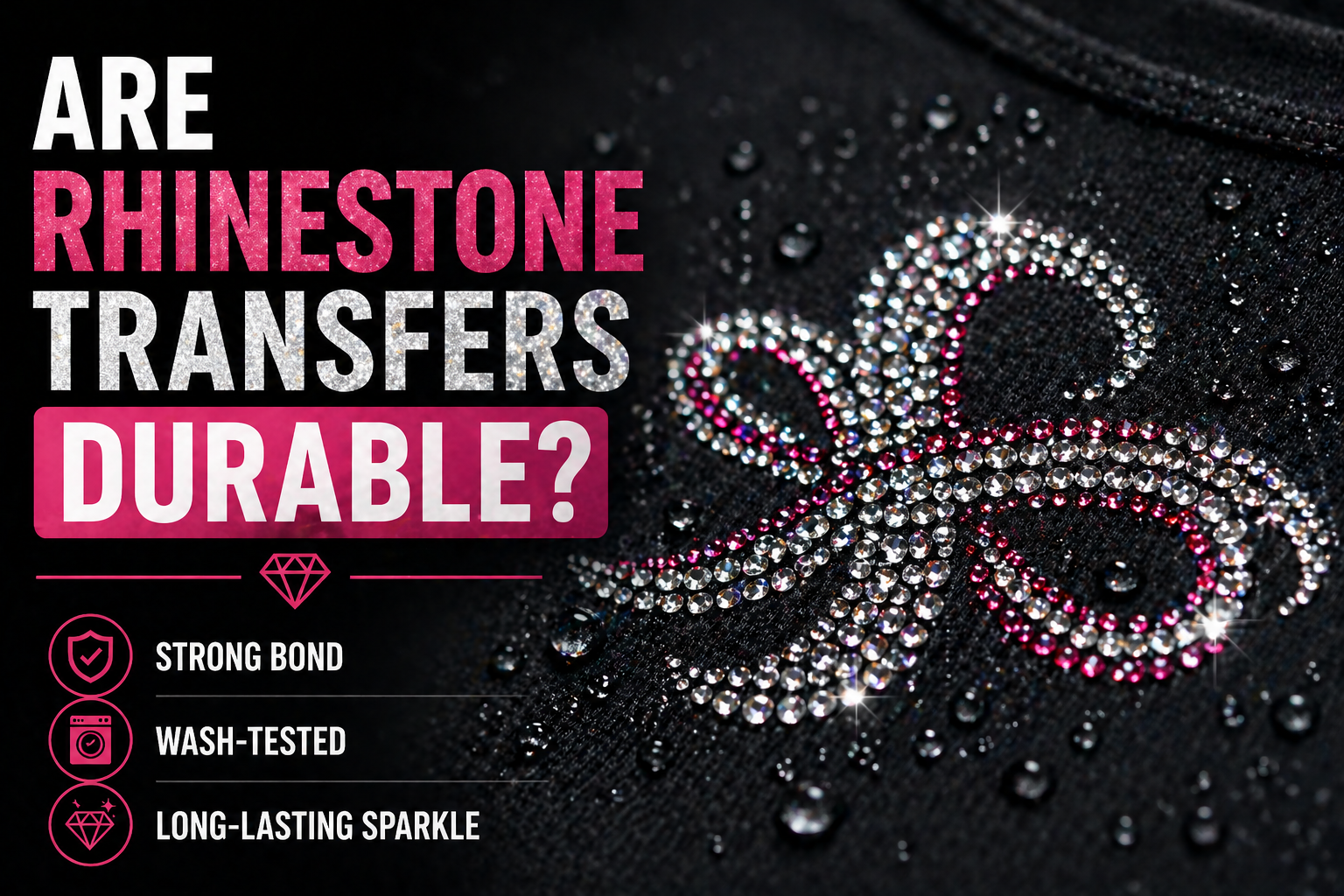
How to Evaluate Rhinestone Transfer Durability
Durability is a property of the applied system: stone, adhesive, fabric, press cycle and aftercare. A sample test on the intended garment answers more than a promise about the transfer alone.
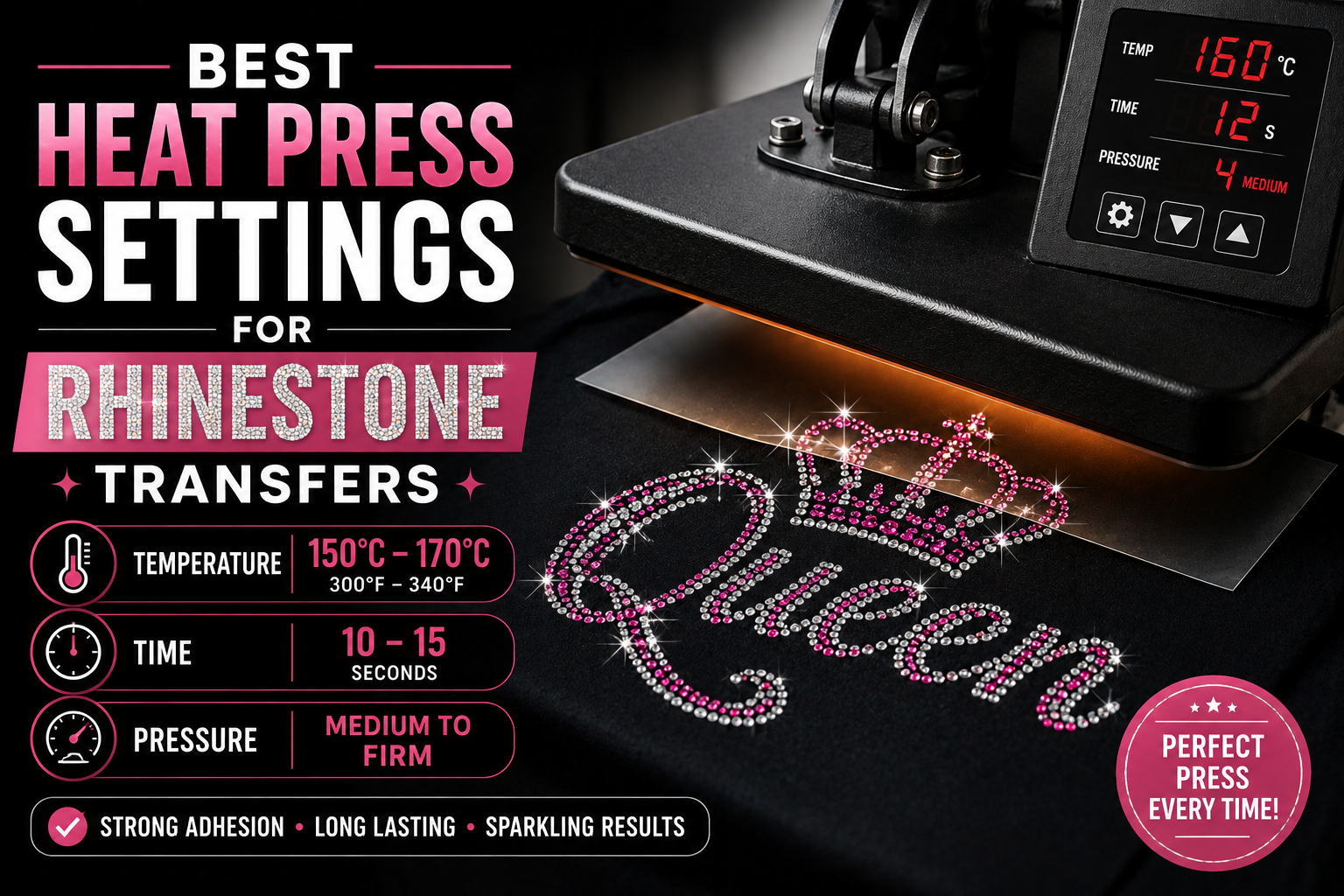
Finding Heat Press Settings for a Rhinestone Transfer
No single temperature and time combination is safe for every textile and adhesive. Start from the supplier's directions, then establish a repeatable setting on the exact garment and equipment.
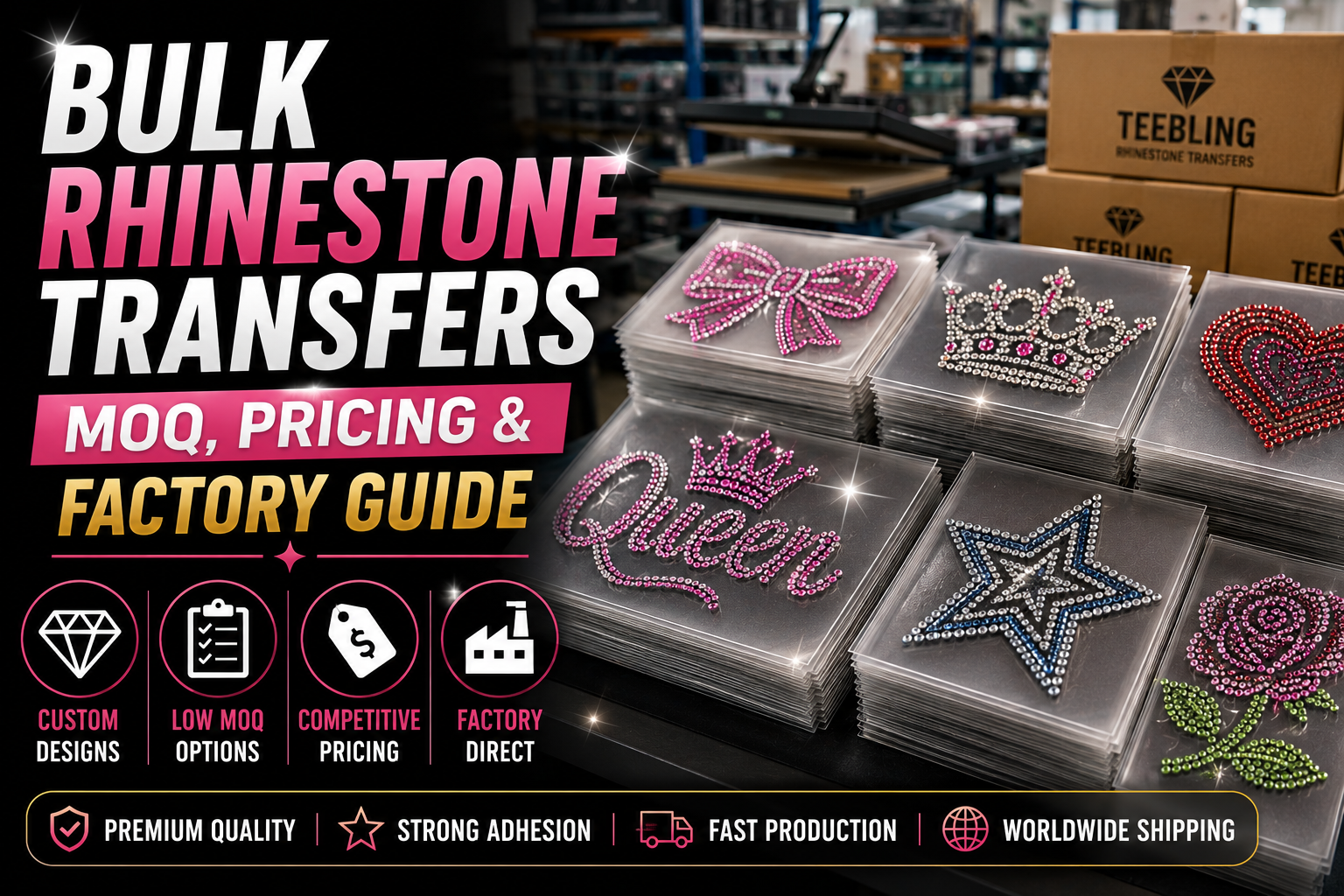
Plan a Bulk Rhinestone Transfer Order
A bulk quote becomes useful when artwork, quantity, receiving garment and acceptance criteria are fixed. Those choices also explain why two visually similar transfers can carry different production terms.
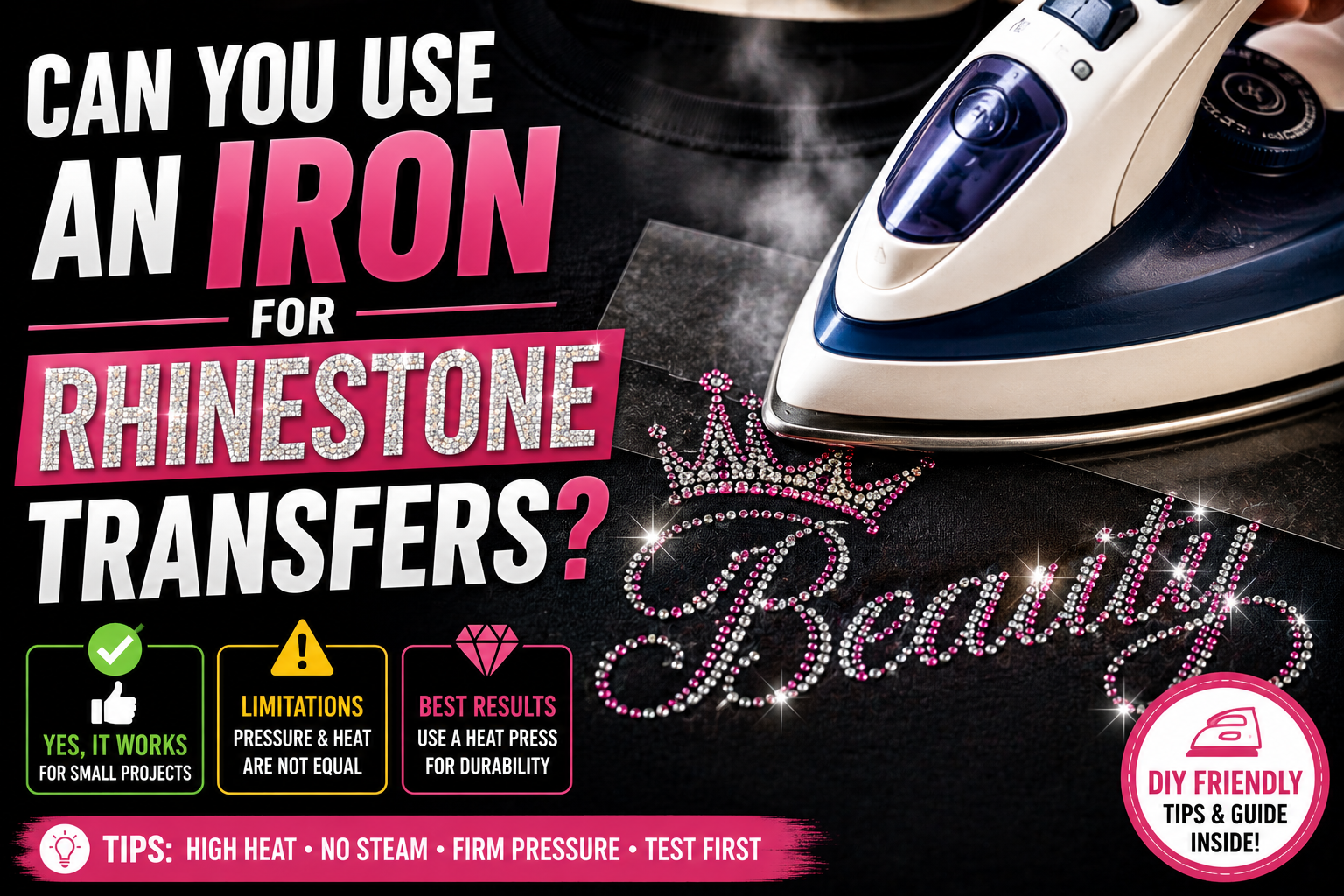
Can a Household Iron Apply Rhinestone Transfers?
An iron can provide heat, but pressure and temperature are harder to control across a motif. The practical answer depends on the transfer, fabric and whether the result is a one-off craft or a repeatable product.

Specify a Custom Heat Transfer Label
A label has to communicate the brand at small scale while staying compatible with the garment. Material choice, relief, artwork and application process should be reviewed as one system.
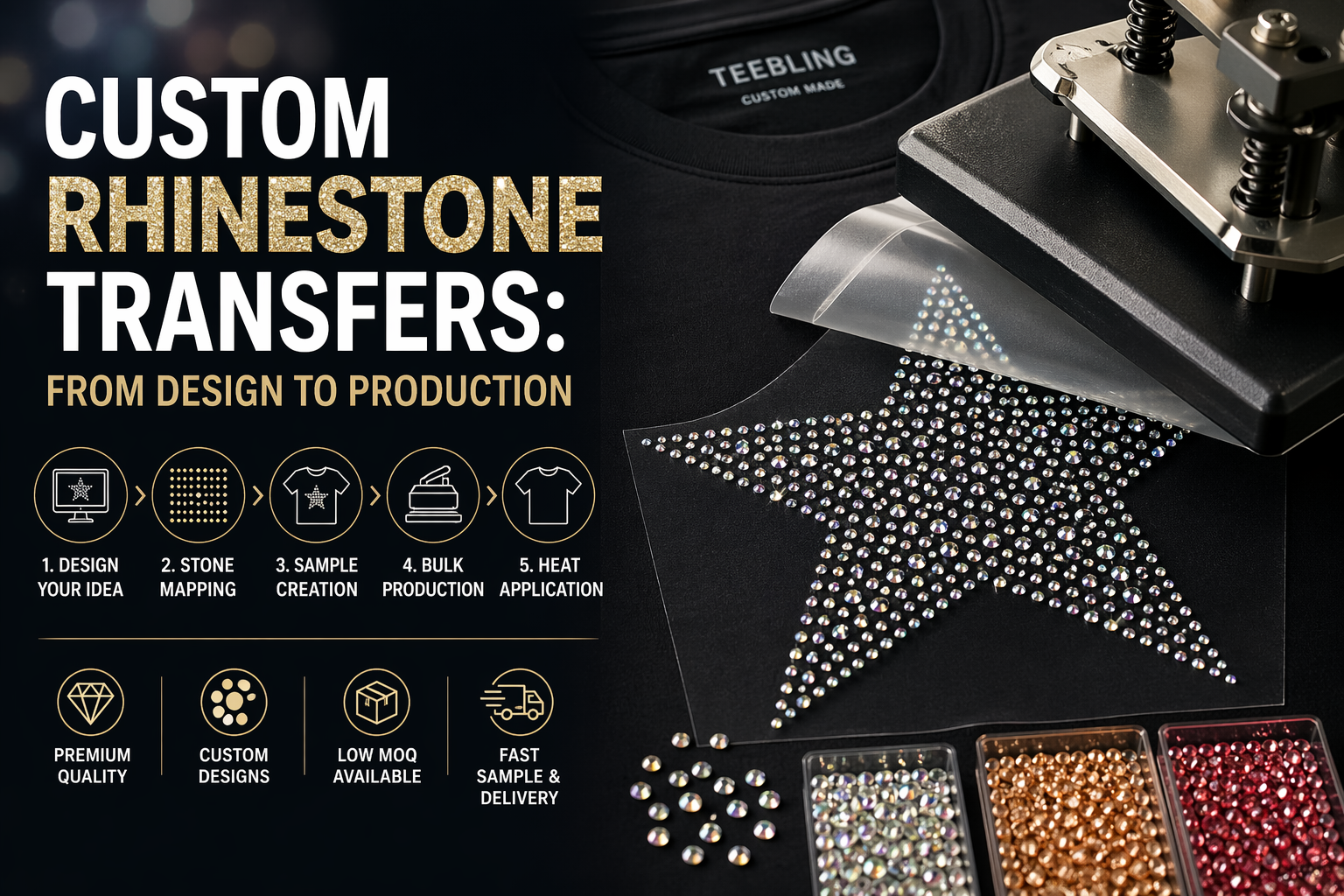
Move a Custom Rhinestone Design into Production
The design journey begins with the receiving product and ends with an approved applied sample. Each handoff should answer a different question before volume work starts.
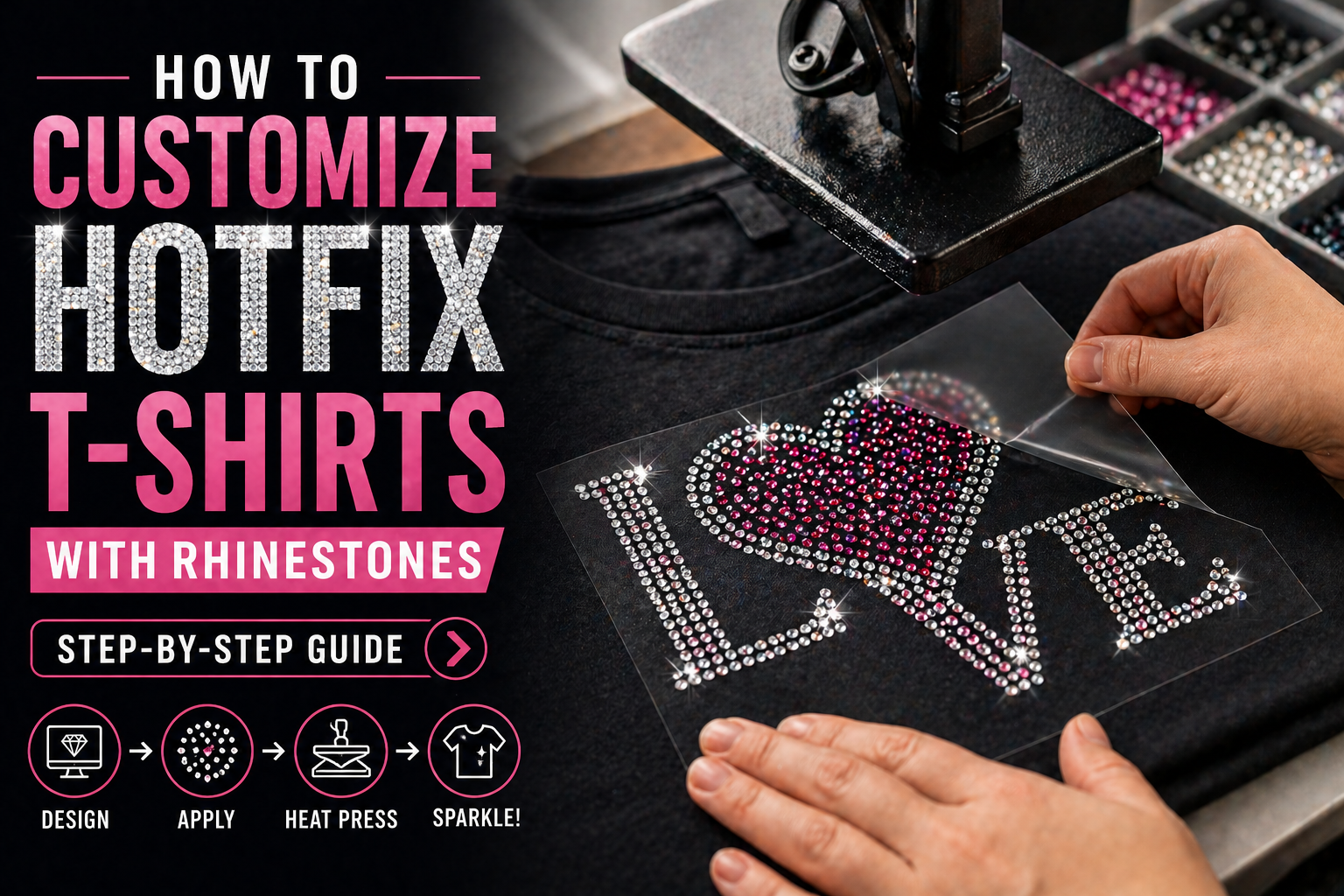
Build a Repeatable Hotfix Rhinestone T-Shirt
A rhinestone tee is a complete garment program. The motif can only be approved against the shirt fit, fabric, color and size range on which it will be sold.
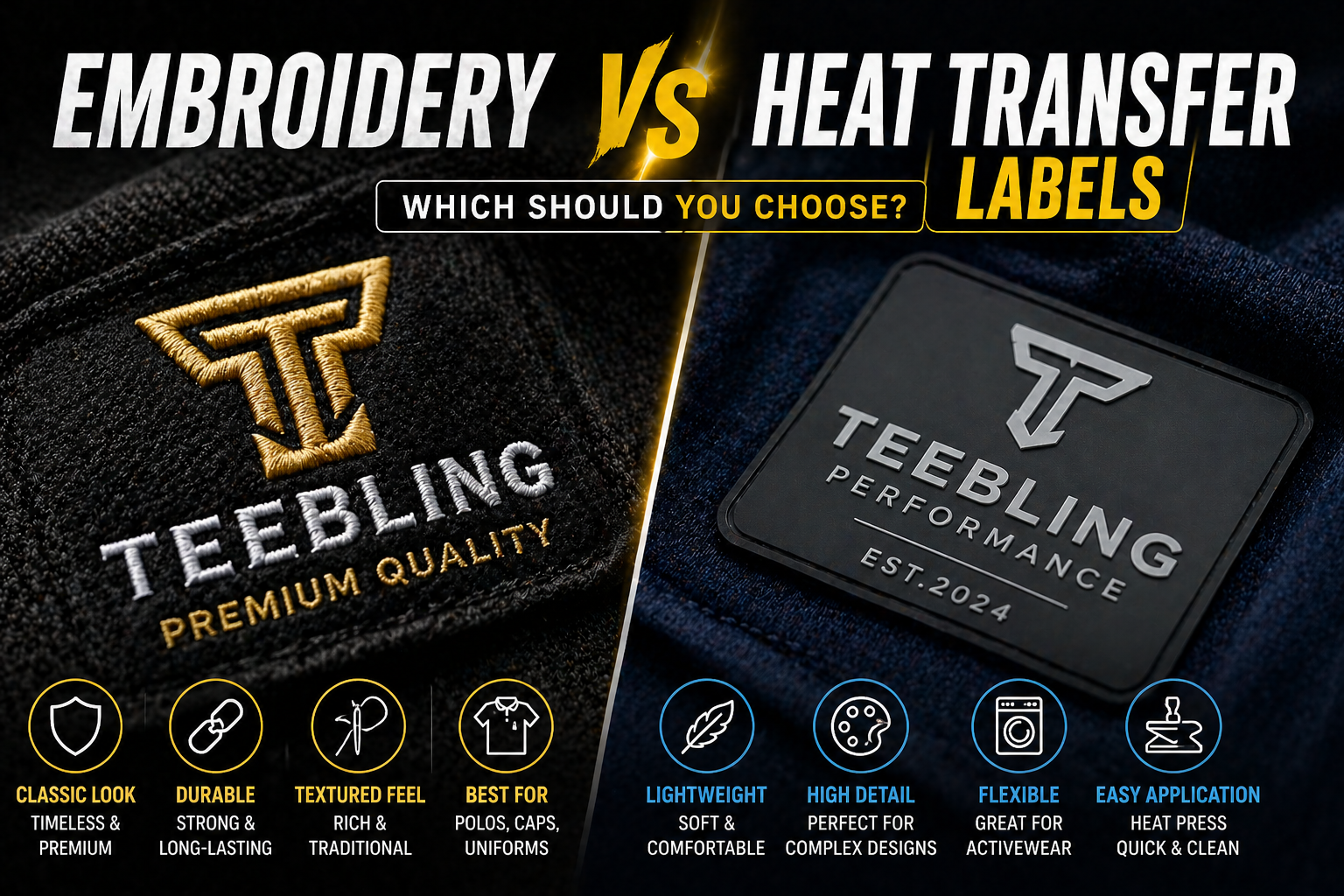
Choose Between Embroidered and Heat Transfer Labels
The useful comparison is about the receiving garment and desired finish. An embroidered label adds thread structure; a heat transfer puts a graphic onto the surface through an application process.
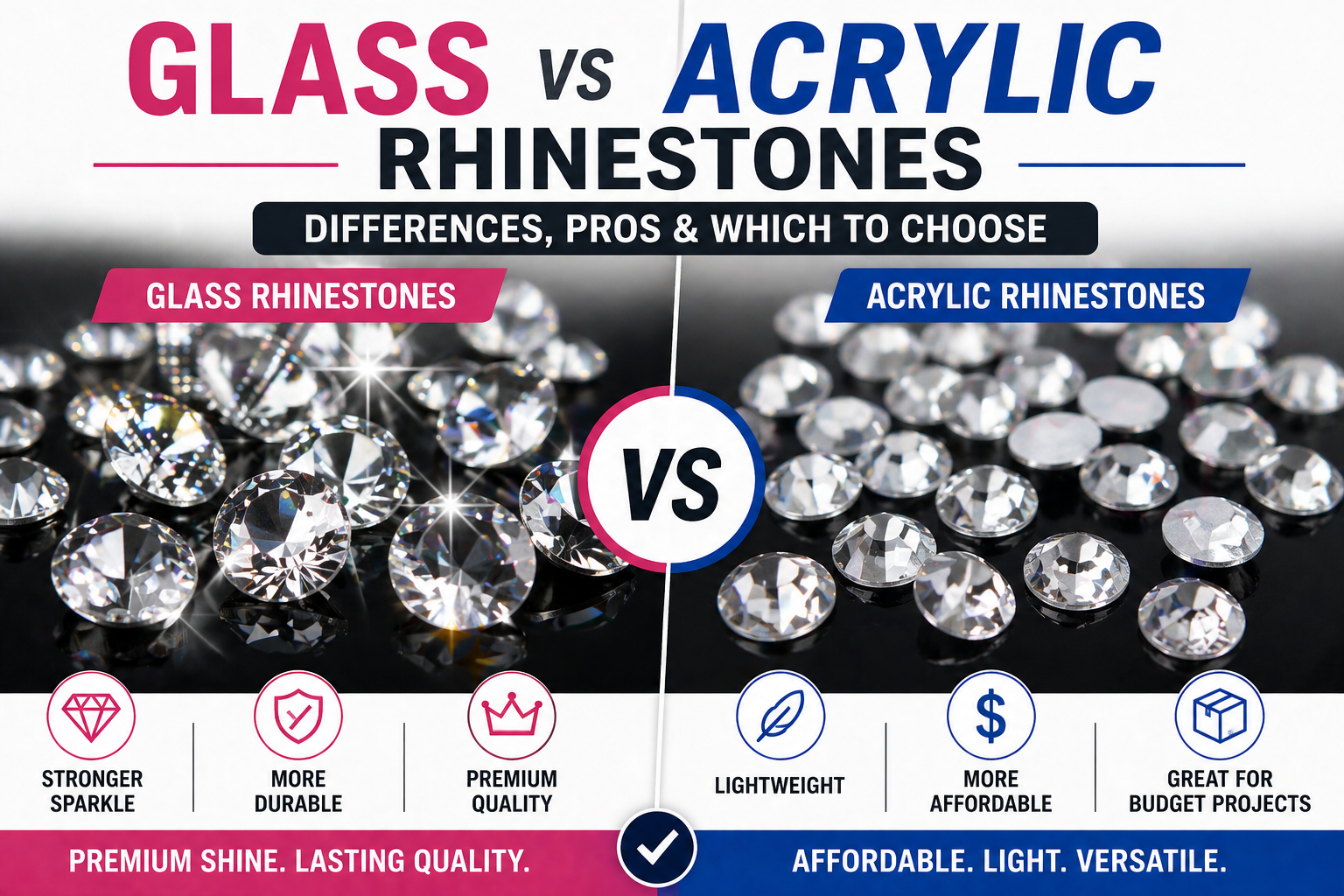
Compare Glass and Acrylic Rhinestones for a Project
Stone composition influences weight, surface appearance, heat tolerance and cost. The right comparison is a sample under the lighting and handling conditions of the finished product.
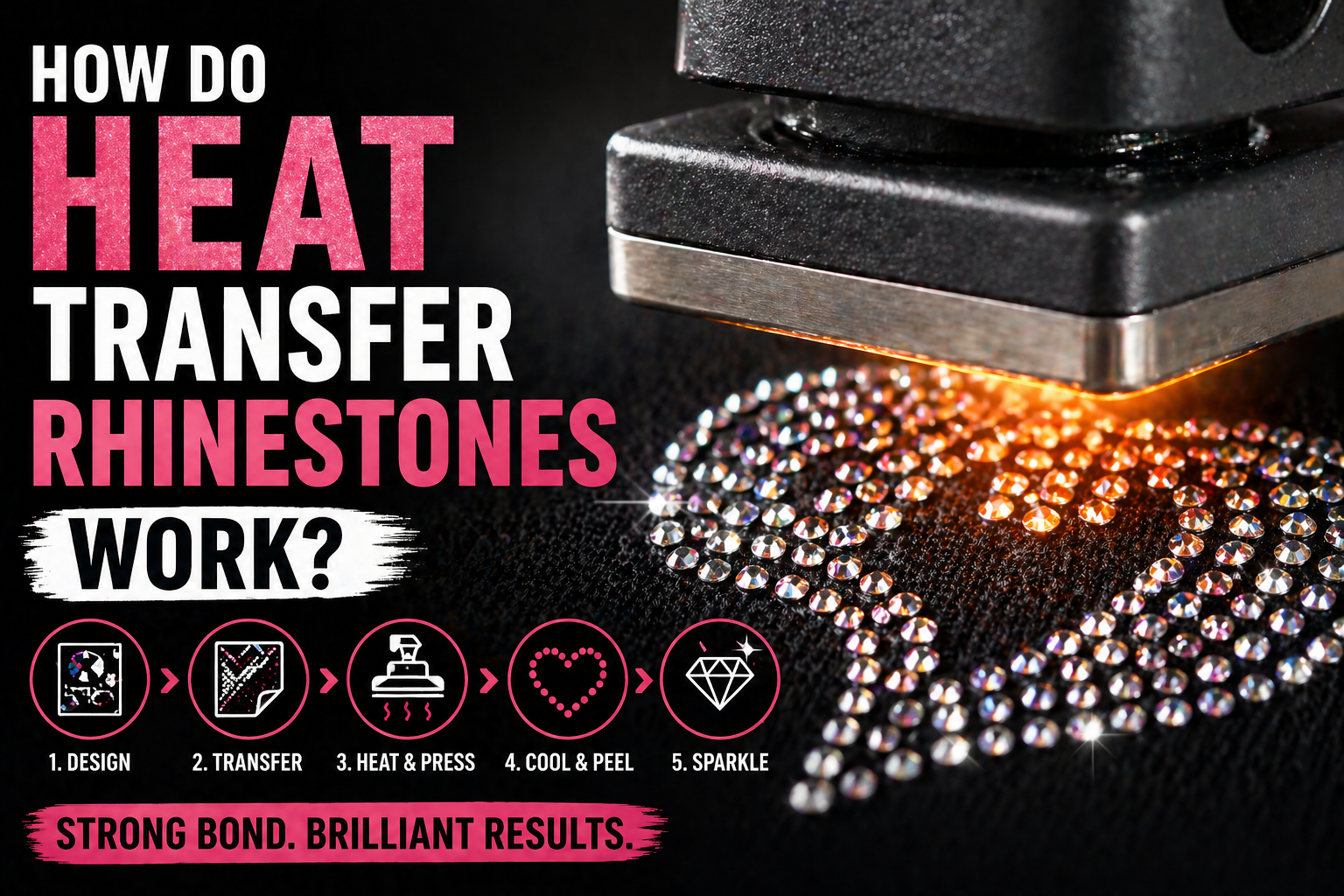
How a Rhinestone Heat Transfer Bonds to Fabric
A pre-arranged stone design uses a carrier to hold placement while heat and pressure activate the bonding layer. The transfer only becomes a garment decoration after it passes an application test.
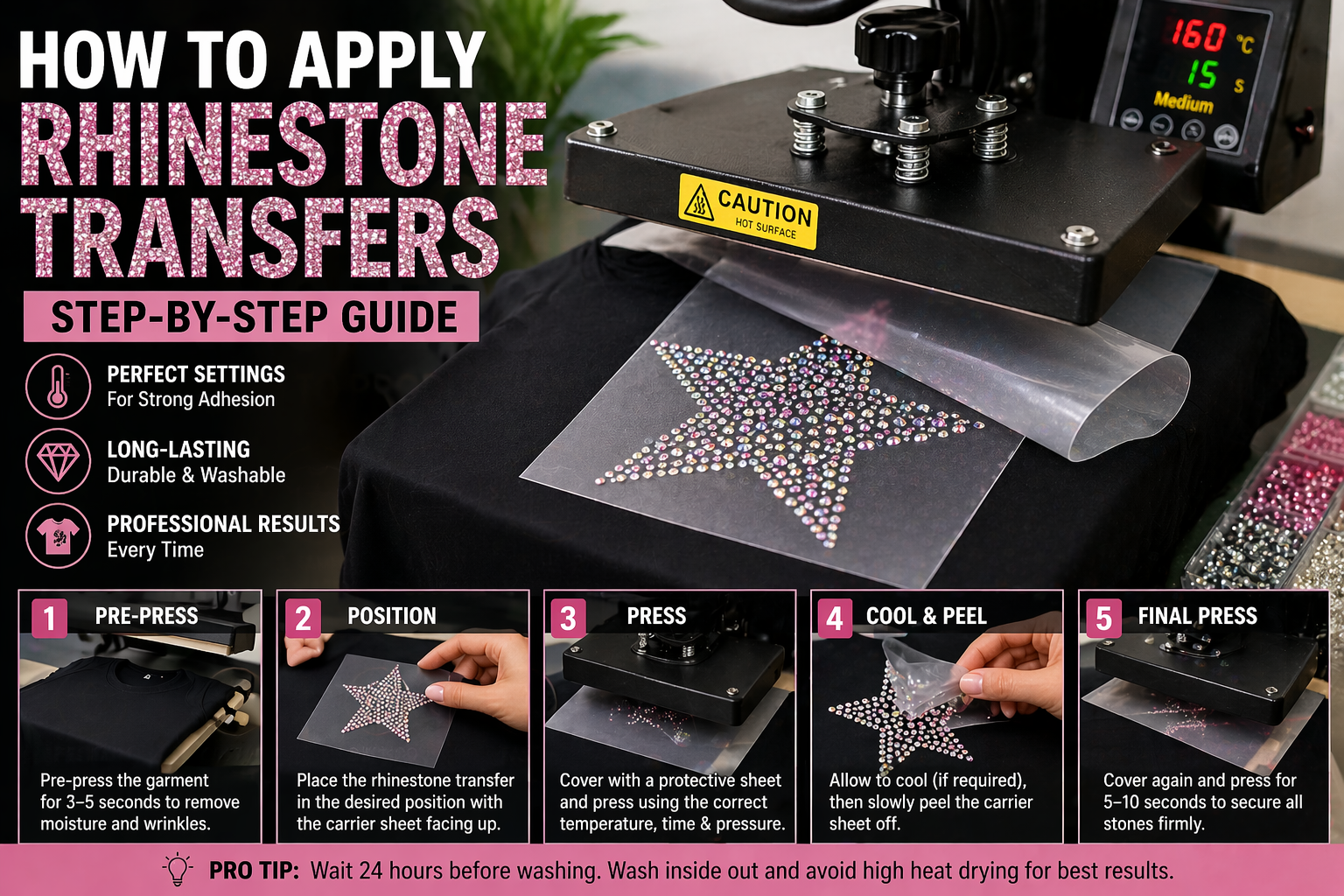
Apply a Rhinestone Transfer with a Test-First Process
A consistent application follows a short sequence: prepare the garment, align the carrier, press to the supplier's specification, peel correctly and inspect the cooled result.
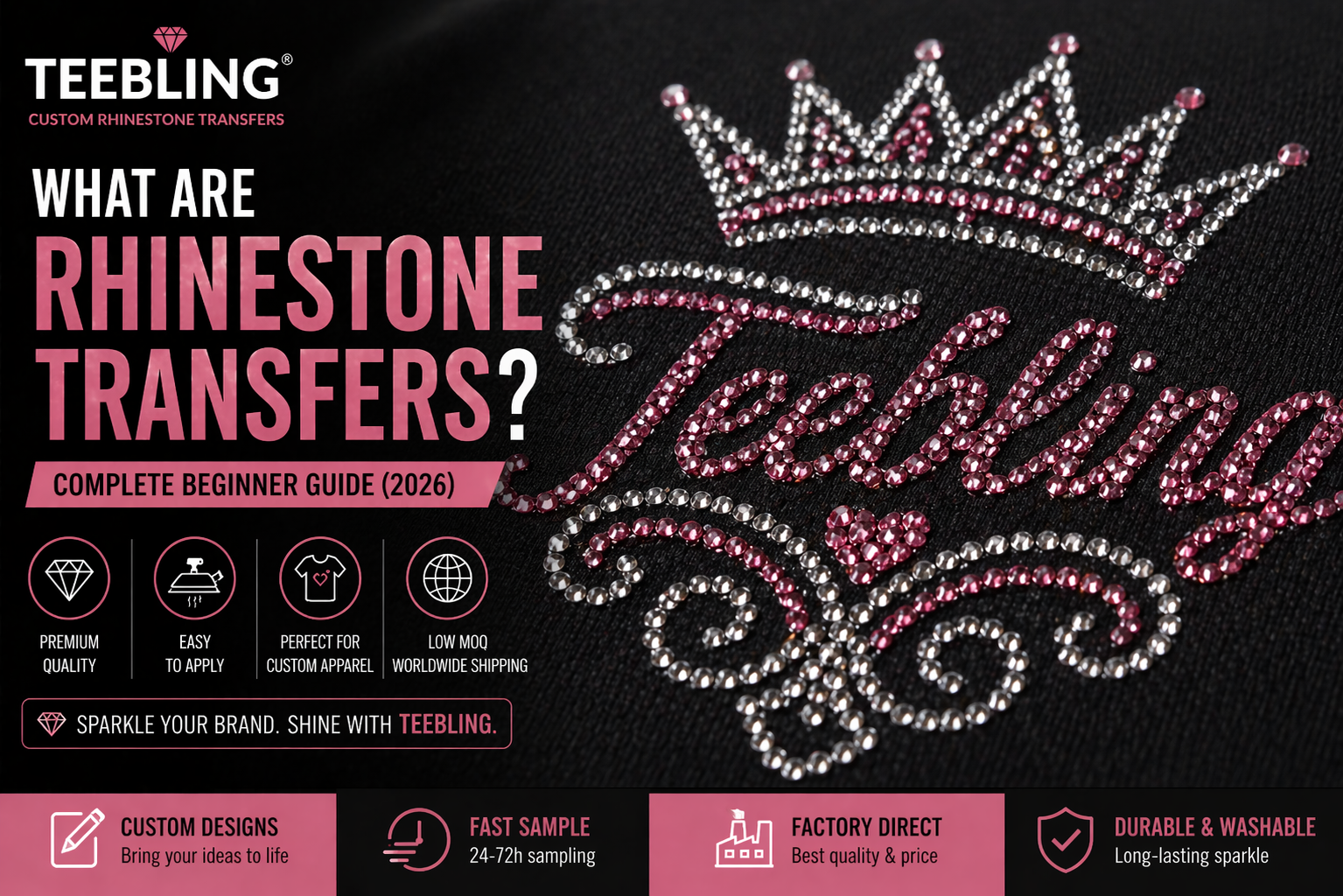
Rhinestone Transfers: A Practical Buyer Primer
Rhinestone transfers are arranged motifs intended to be applied to a suitable surface. Buyers need to distinguish ready-made artwork from a custom layout and specify the garment that will receive it.
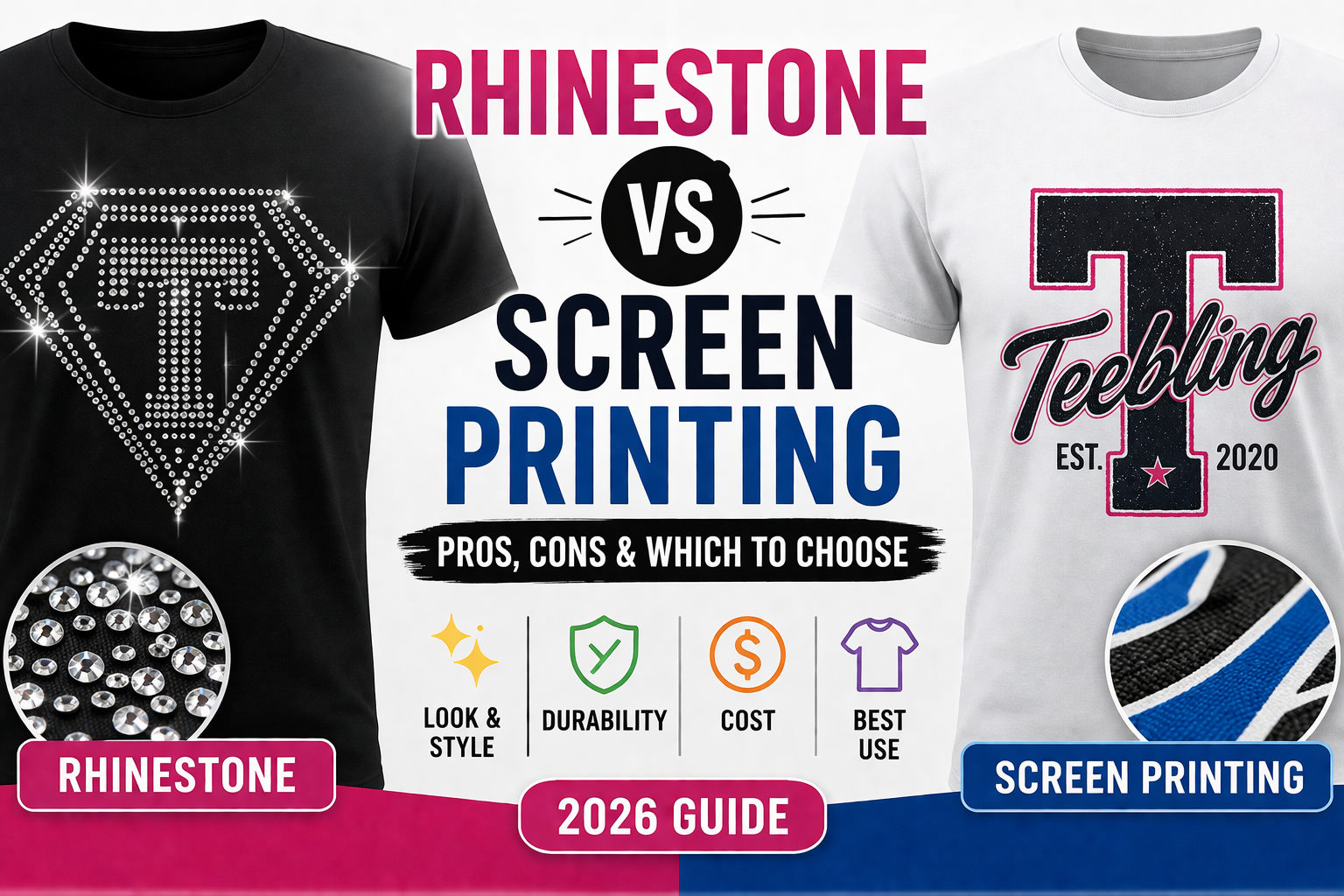
Rhinestones or Screen Printing for Decorated Apparel?
Both methods can carry a graphic, but they create different texture, light response and production steps. Choose according to the garment and the effect the buyer will actually notice.
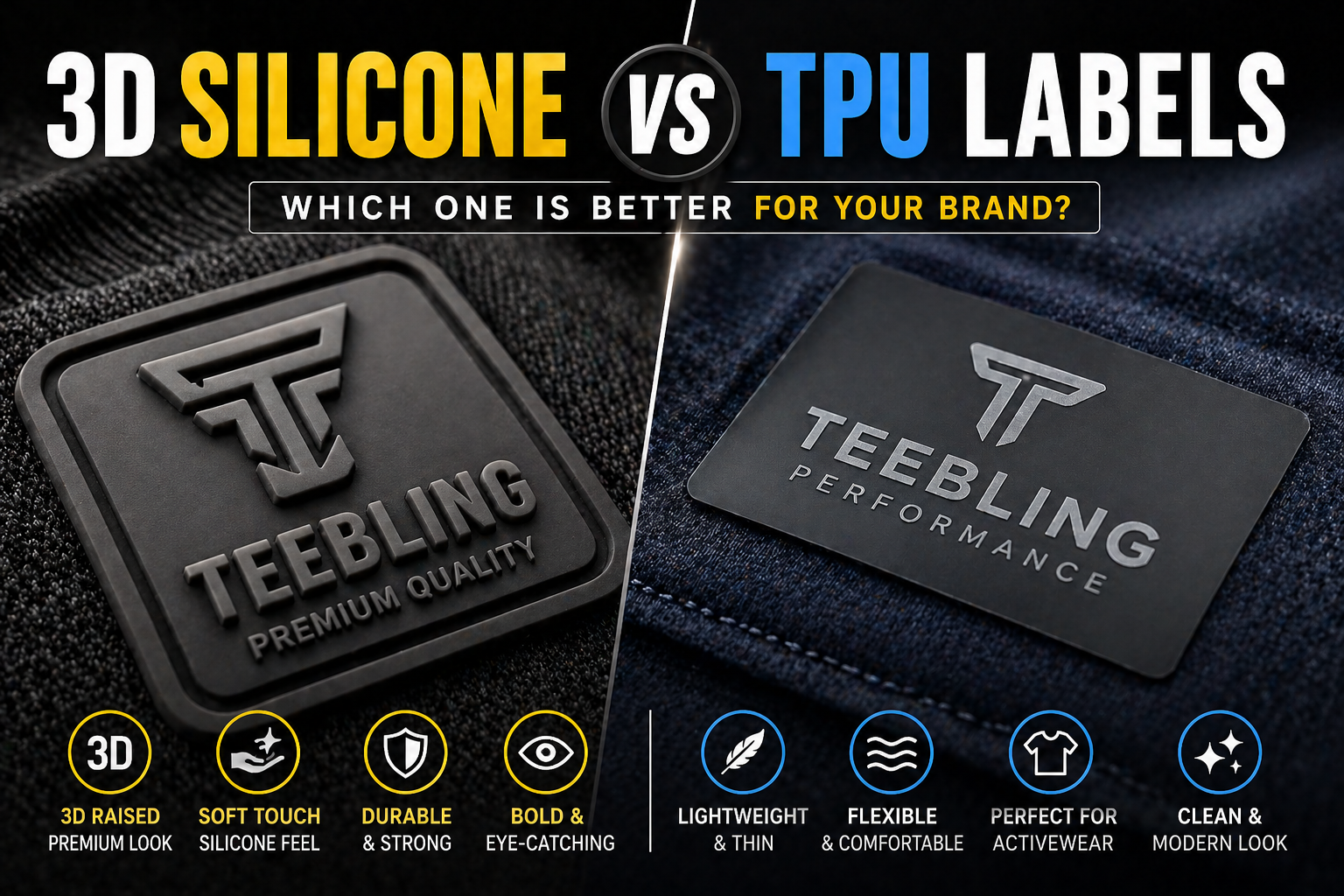
Compare Silicone and TPU Labels on a Garment
Silicone and TPU can both create dimensional brand marks, but the feel, relief, edge and application method should be compared on the receiving material rather than from a rendering.
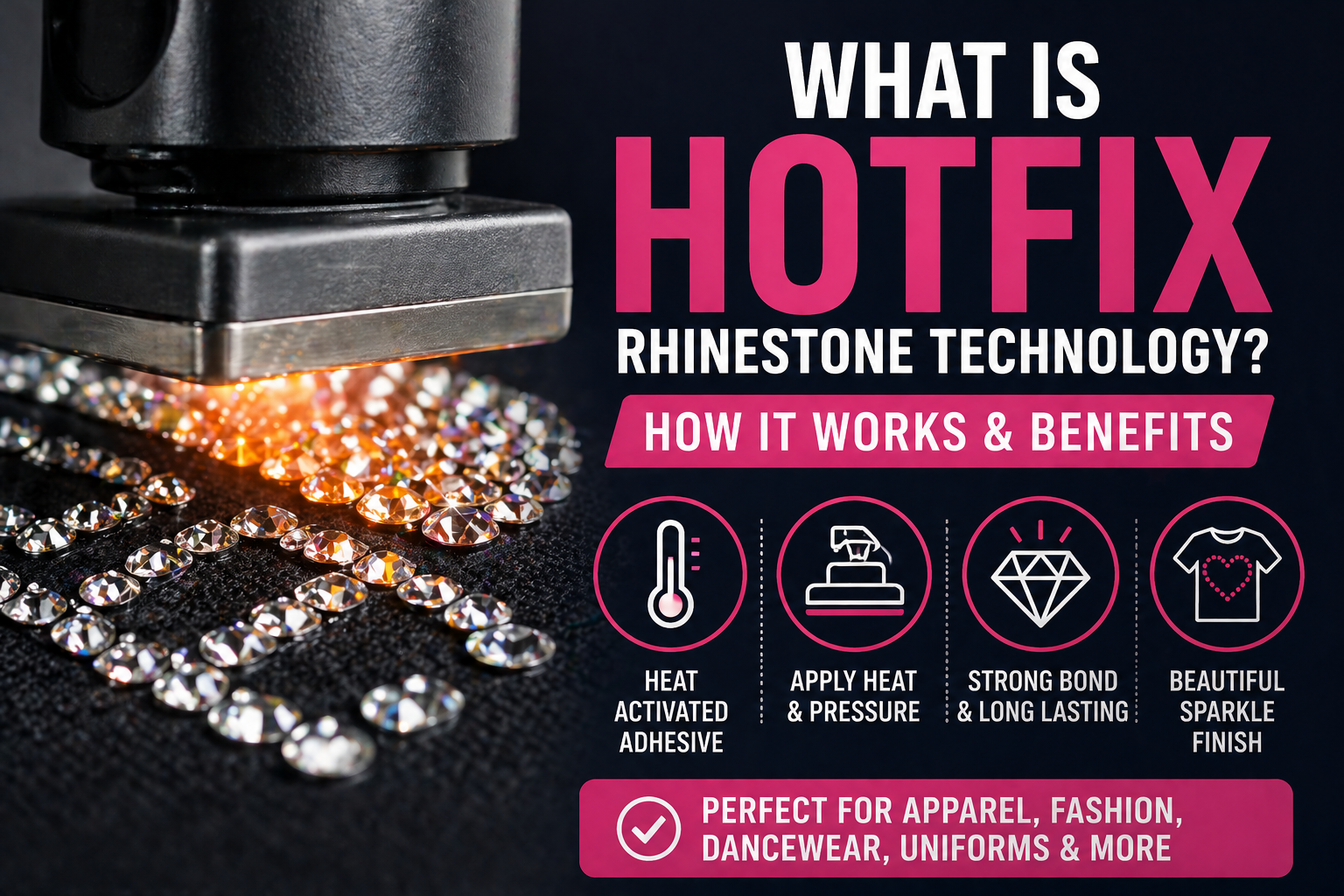
What Hotfix Rhinestones Mean in Production
Hotfix refers to stones prepared for a heat-activated attachment process. It does not guarantee a good result on every textile; the receiving surface and press conditions still need verification.