Heat Transfer Label Guide
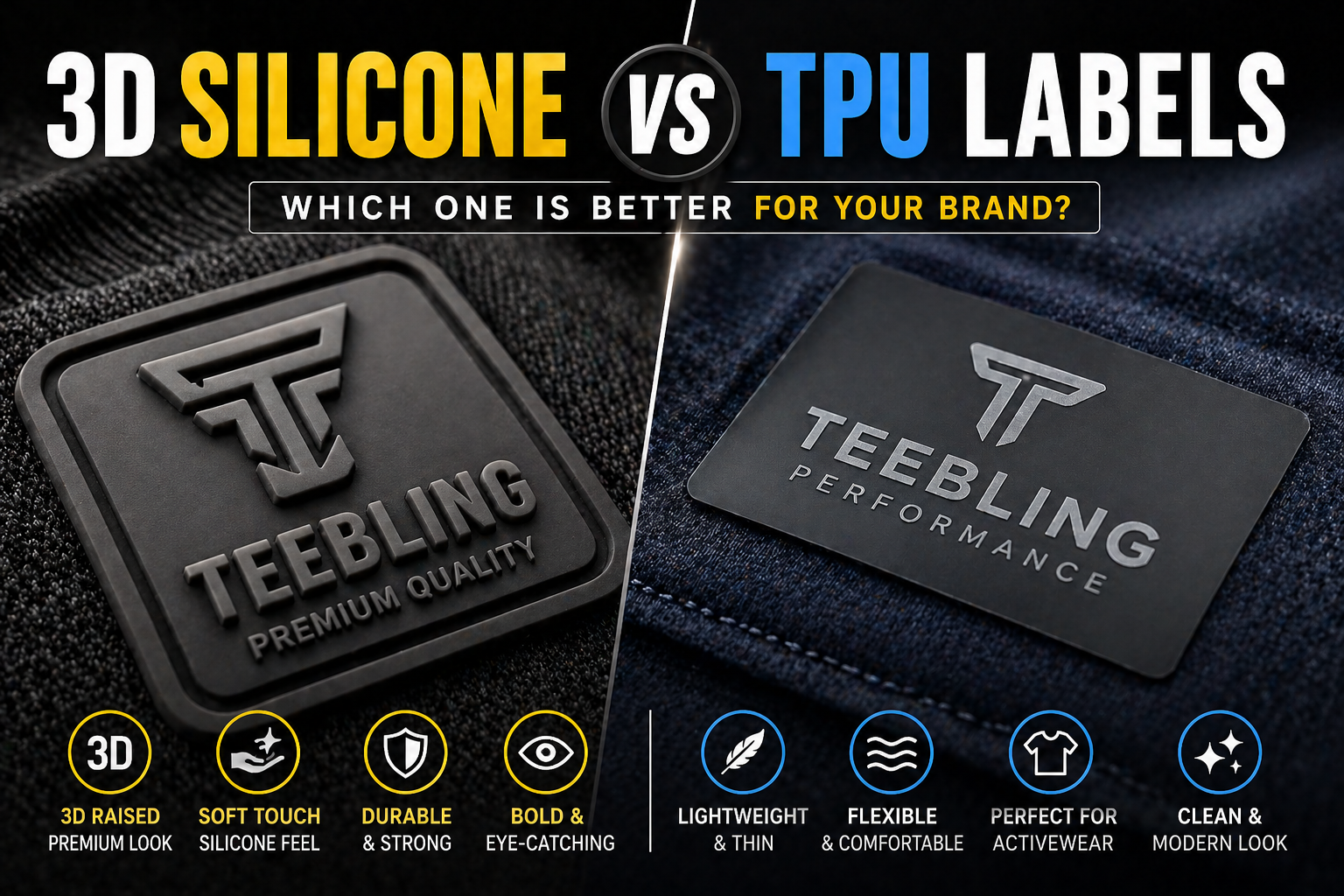
3D Silicone vs TPU Labels: Which One Is Better for Your Brand?
Choosing between 3D silicone labels and TPU heat transfer labels can directly impact your product’s look, feel, and brand perception. Both are popular in apparel and accessories, but they serve very different purposes depending on your design goals and target market.
Quick answer: Choose silicone labels for a premium 3D, soft-touch, high-end look. Choose TPU labels for a clean, lightweight, flexible, and modern branding style.
What Are 3D Silicone Labels?
3D silicone labels are raised heat transfer labels made from soft silicone material. They create a dimensional, textured surface that stands out visually and physically.
These labels are commonly used in streetwear, sportswear, premium fashion, outdoor gear, and branded accessories where a bold, high-quality logo is required.
- Soft-touch rubber-like feel
- Raised 3D effect
- Premium brand appearance
- Strong visual impact
What Are TPU Labels?
TPU (Thermoplastic Polyurethane) labels are smooth, flexible heat transfer labels that sit flat on the fabric. They provide a modern, minimal, and clean branding effect.
TPU labels are widely used in activewear, sportswear, performance clothing, bags, and products where flexibility and comfort are important.
- Smooth and lightweight
- Flexible and stretch-friendly
- Clean, modern look
- Comfortable for direct skin contact
Silicone vs TPU: Key Differences
| Feature | 3D Silicone Labels | TPU Labels |
|---|---|---|
| Texture | Soft, rubber-like, raised | Smooth, flat surface |
| Visual Effect | Bold, 3D, premium | Clean, minimal, modern |
| Flexibility | Moderate | High flexibility |
| Comfort | Slightly thicker feel | Very lightweight and soft |
| Brand Positioning | Premium / fashion-forward | Sporty / modern / minimal |
| Best Use | Streetwear, fashion, accessories | Activewear, performance apparel |
Which One Looks More Premium?
3D silicone labels generally look more premium due to their raised structure and soft-touch finish. They add depth and texture, making the logo stand out visually and physically.
TPU labels, while not raised, offer a clean and modern look that feels more subtle and minimal. This can also be considered premium in performance and luxury sportswear brands.
Tip: Premium doesn’t always mean 3D—minimal brands often prefer TPU for a sleek, high-end aesthetic.
Which One Is Better for Durability?
Both silicone and TPU labels are durable when applied correctly. However:
- Silicone labels are thicker and more resistant to wear and abrasion
- TPU labels perform better on stretch fabrics
- Both require proper heat pressing for long-lasting results
- Washing care significantly affects lifespan
When to Choose Silicone Labels
- You want a bold 3D logo
- Your brand targets premium or streetwear markets
- You need a strong visual impact
- Your product is bags, jackets, or thick garments
When to Choose TPU Labels
- You want a clean, minimal design
- Your product requires flexibility and stretch
- Comfort is a priority (skin-contact areas)
- You are designing activewear or sportswear
Choose Silicone If...
You want bold, raised branding with a premium and tactile feel.
Choose TPU If...
You want lightweight, flexible, and modern branding for performance products.
Final Thoughts
There is no single “better” option—only what fits your brand best. Silicone labels are ideal for bold, high-impact branding, while TPU labels are perfect for clean, flexible, and comfortable applications.
The right choice depends on your product category, target audience, and brand identity. Many brands even use both materials across different product lines.
Need Custom TPU or Silicone Labels?
Teebling offers custom TPU and 3D silicone heat transfer labels tailored for apparel brands, sportswear, bags, and accessories.
Get a Quote