Easy Returns & Refunds Within 24 Hours
Tips & Tutorials

Can You Use an Iron for Rhinestone Transfers?

Teebling Team 07 May 2026
Can You Use an Iron for Rhinestone Transfers?

Rhinestone Transfer Guide

Can You Use an Iron for Rhinestone Transfers?

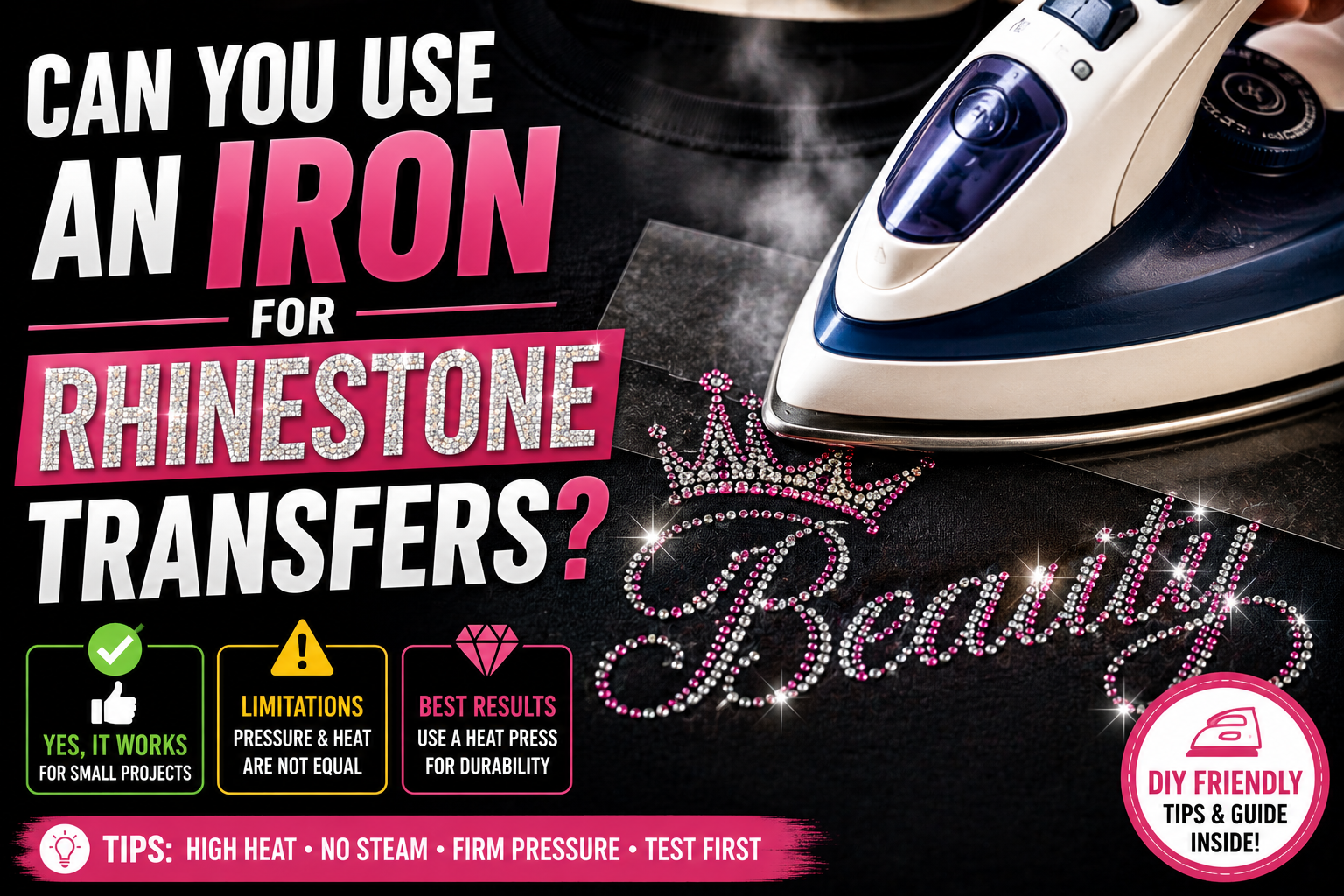
Yes, you can use a household iron for rhinestone transfers, but the results may not be as consistent as using a heat press. An iron can work for small designs, personal projects, and simple applications, while a heat press is better for professional and long-lasting results.

Quick answer: A household iron can apply rhinestone transfers, but it requires firm pressure, even heat, and careful timing. For business production, a heat press is strongly recommended.

Can You Really Apply Rhinestone Transfers with an Iron?

Rhinestone transfers use heat-activated adhesive on the back of each stone. When heat and pressure are applied, the adhesive melts and bonds to the fabric surface.

Since a household iron produces heat, it can activate the adhesive. However, the main challenge is pressure. A heat press provides even pressure across the entire design, while an iron depends on hand pressure and movement.

Iron vs Heat Press: Key Differences

Feature Household Iron Heat Press
Pressure Uneven, manual pressure Even and controlled pressure
Temperature Less accurate Accurate temperature control
Best For Small designs and home use Professional and bulk production
Durability Can vary More consistent and reliable
Ease of Use Requires careful manual work Easier to repeat consistently

When Using an Iron Is Acceptable

Using an iron can be acceptable for simple projects where professional production quality is not required. It is best for small rhinestone designs, one-off personal shirts, craft projects, or testing a design.

  • Small rhinestone designs
  • Personal DIY projects
  • Simple T-shirts or tote bags
  • Temporary or low-volume use
  • Testing a sample before production

Best advice: Use an iron only for small or personal projects. For orders, customers, or brand products, use a heat press.

How to Apply Rhinestone Transfers with an Iron

Step 1: Prepare the Fabric

Place the garment on a flat, hard, heat-resistant surface. Avoid soft ironing boards because they may absorb pressure and reduce adhesion.

Step 2: Pre-Press the Garment

Press the fabric for a few seconds to remove moisture and wrinkles. A clean and flat surface helps the rhinestones bond more securely.

Step 3: Position the Transfer

Place the rhinestone transfer on the garment with the clear carrier sheet facing up. Check alignment carefully before applying heat.

Step 4: Cover the Design

Use a Teflon sheet, baking paper, or thin cotton cloth over the design. This protects the fabric and transfer film from direct heat.

Step 5: Apply Firm Pressure

Press the iron straight down with firm pressure. Do not slide the iron back and forth, because this can shift the rhinestone design.

Step 6: Cool and Peel

Let the transfer cool slightly, then peel the carrier sheet slowly. If any rhinestones lift, cover the design again and press for a few more seconds.

Step 7: Final Press

Cover the rhinestones again and press once more for better bonding. This helps improve durability and reduces the risk of stones falling off.

Suggested Iron Settings

Setting Recommendation
Iron Mode Cotton / high heat setting
Steam Turn steam off
Pressure Firm downward pressure
Time 15–25 seconds per section

Because household irons do not always show exact temperature, testing is very important. Start with a small sample before applying a full design.

Common Problems When Using an Iron

  • Uneven pressure: Some stones stick while others lift.
  • Sliding the iron: The design may shift out of place.
  • Steam use: Moisture can weaken adhesion.
  • Soft surface: The fabric may not receive enough pressure.
  • Large designs: Irons may not heat the full design evenly.

Iron Application Tips for Better Results

  • Use a hard, flat surface instead of a soft ironing board
  • Turn off steam completely
  • Press straight down instead of moving the iron
  • Apply pressure section by section for larger designs
  • Do a final press after peeling the carrier sheet

Use an Iron If...

You are making a small DIY project, simple shirt, craft item, or personal design.

Use a Heat Press If...

You need professional, repeatable, durable results for customers, brands, or bulk orders.

Final Thoughts

You can use an iron for rhinestone transfers, especially for small personal projects. However, because an iron cannot provide the same even pressure and temperature control as a heat press, results may vary.

For professional apparel, customer orders, or brand production, a heat press is the better choice. It gives stronger adhesion, cleaner application, and more consistent durability.

Need Professional Rhinestone Transfers?

Teebling provides custom rhinestone transfers for T-shirts, hoodies, dancewear, events, boutiques, and apparel brands. We support custom designs, strong adhesion, fast sampling, and business production orders.

Get a Quote

Share this post:
Back to Blog

Have a Project in Mind?

Get in touch with our team to discuss your custom project or explore our product range.

Contact Us
Welcome Guest!
Contact Us
Request B2B Quote

Get a Quick Quote

Tell us about your project and we'll get back to you within 24 hours.

Your Cart

Loading cart...