Tips & Tutorials

Apply a Rhinestone Transfer with a Test-First Process

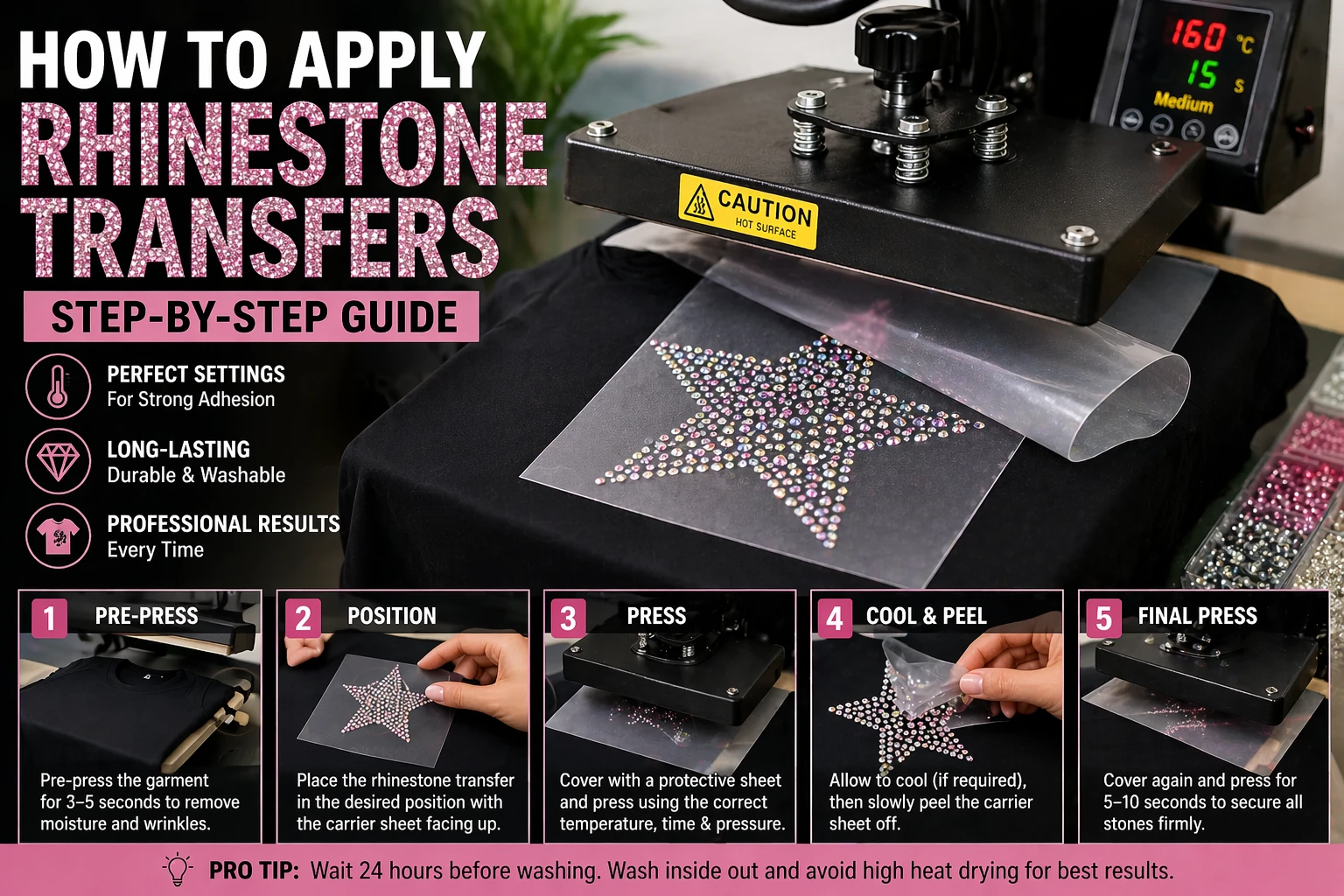
A consistent application follows a short sequence: prepare the garment, align the carrier, press to the supplier's specification, peel correctly and inspect the cooled result.

LCHOTFIX practical guide

Apply a Rhinestone Transfer with a Test-First Process visual reference
01

Prepare a clean, flat panel

Check the fabric care label, remove moisture or wrinkles as directed, and keep seams or pockets out of the decoration field. Mark alignment before placing the carrier.

What to do: Use a spare production blank for the first trial.
02

Press without shifting the design

Use the transfer supplier's process for protective sheet, dwell, pressure and peel. If a motif is larger than the press platen, plan how to cover it evenly instead of sliding an unsecured carrier.

What to do: Record the press and garment used for the trial.
03

Inspect and document

Check every edge after cooling, then test the garment under its intended care conditions. If an area lifts, investigate pressure and contact before changing temperature.

What to do: Keep the passing sample beside the written process.

Field exercise

Make the operator handoff explicit

A test may pass in the sample room and fail in a larger run if the production team receives only a temperature number. Pass on the transfer version, garment blank, placement reference, protective layer, full press cycle, peel condition and inspection standard. Demonstrate the process on a production blank and photograph the accepted result. Keep rejected trials with their settings so the team knows which adjustments were already ruled out.

Evidence to retain

  1. 01Confirm garment and transfer identity before setting up the press.
  2. 02Mark placement from stable garment references and record any size-specific adjustment.
  3. 03Inspect after cooling, then perform the agreed care test before declaring the process ready.
Wholesale Inquiry

Request a Bulk Quote

Send your artwork, quantity, destination, and specifications for a tailored quote.

By submitting, you agree to our privacy policy.

FAQ

Common questions

What should I check about prepare a clean, flat panel before ordering Apply a Rhinestone Transfer with a Test-First Process?

Check the fabric care label, remove moisture or wrinkles as directed, and keep seams or pockets out of the decoration field. Mark alignment before placing the carrier.

What should I check about press without shifting the design before ordering Apply a Rhinestone Transfer with a Test-First Process?

Use the transfer supplier's process for protective sheet, dwell, pressure and peel. If a motif is larger than the press platen, plan how to cover it evenly instead of sliding an unsecured carrier.

How should buyers inspect and document for Apply a Rhinestone Transfer with a Test-First Process?

Check every edge after cooling, then test the garment under its intended care conditions. If an area lifts, investigate pressure and contact before changing temperature.

What should I check about make the operator handoff explicit before ordering Apply a Rhinestone Transfer with a Test-First Process?

A test may pass in the sample room and fail in a larger run if the production team receives only a temperature number. Pass on the transfer version, garment blank, placement reference, protective layer, full press cycle, peel condition and inspection standard. Demonstrate the process on a production blank and photograph the accepted result. Keep rejected trials with their settings so the team knows which adjustments were already ruled out.

What sequence should a recorded rhinestone application trial follow?

A consistent application follows a short sequence: prepare the garment, align the carrier, press to the supplier's specification, peel correctly and inspect the cooled result.

When should a reader of Apply a Rhinestone Transfer with a Test-First Process consult Tips & Tutorials?

The Apply a Rhinestone Transfer with a Test-First Process page links to Tips & Tutorials for this related decision: application and material choices are easiest to understand through controlled samples. Read that separate reference when its receiving product or buying question matches your own brief.

When should a reader of Apply a Rhinestone Transfer with a Test-First Process consult How to Evaluate Rhinestone Transfer Durability?

The Apply a Rhinestone Transfer with a Test-First Process page links to How to Evaluate Rhinestone Transfer Durability for this related decision: durability is a property of the applied system: stone, adhesive, fabric, press cycle and aftercare. Read that separate reference when its receiving product or buying question matches your own brief.

When should a reader of Apply a Rhinestone Transfer with a Test-First Process consult Finding Heat Press Settings for a Rhinestone Transfer?

The Apply a Rhinestone Transfer with a Test-First Process page links to Finding Heat Press Settings for a Rhinestone Transfer for this related decision: no single temperature and time combination is safe for every textile and adhesive. Read that separate reference when its receiving product or buying question matches your own brief.

When should a reader of Apply a Rhinestone Transfer with a Test-First Process consult Can a Household Iron Apply Rhinestone Transfers??

The Apply a Rhinestone Transfer with a Test-First Process page links to Can a Household Iron Apply Rhinestone Transfers? for this related decision: an iron can provide heat, but pressure and temperature are harder to control across a motif. Read that separate reference when its receiving product or buying question matches your own brief.

Where can I identify the transfer construction before planning an application test?

Review the Rhinestone Heat Transfers & Hotfix Motifs Wholesale category, then confirm the exact item or artwork you intend to apply. Its supplier instructions and the receiving fabric determine the trial; a reference photograph is not a universal heat-press setting.

Contact Us