Detail 01
Graphic contrast
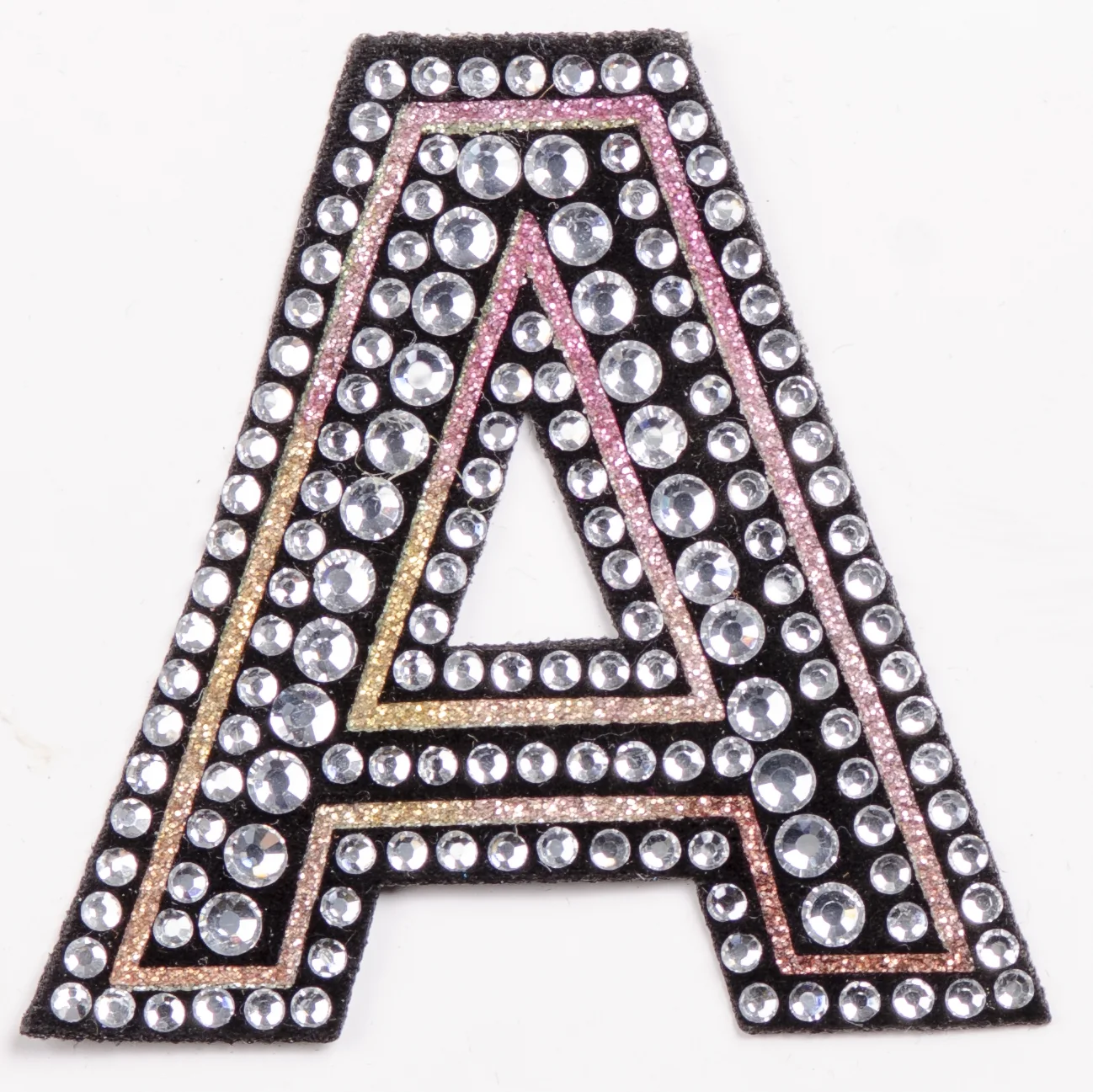
A dark foundation separates the clear stones from light garments and creates a distinct outline even when the crystals are not directly illuminated.
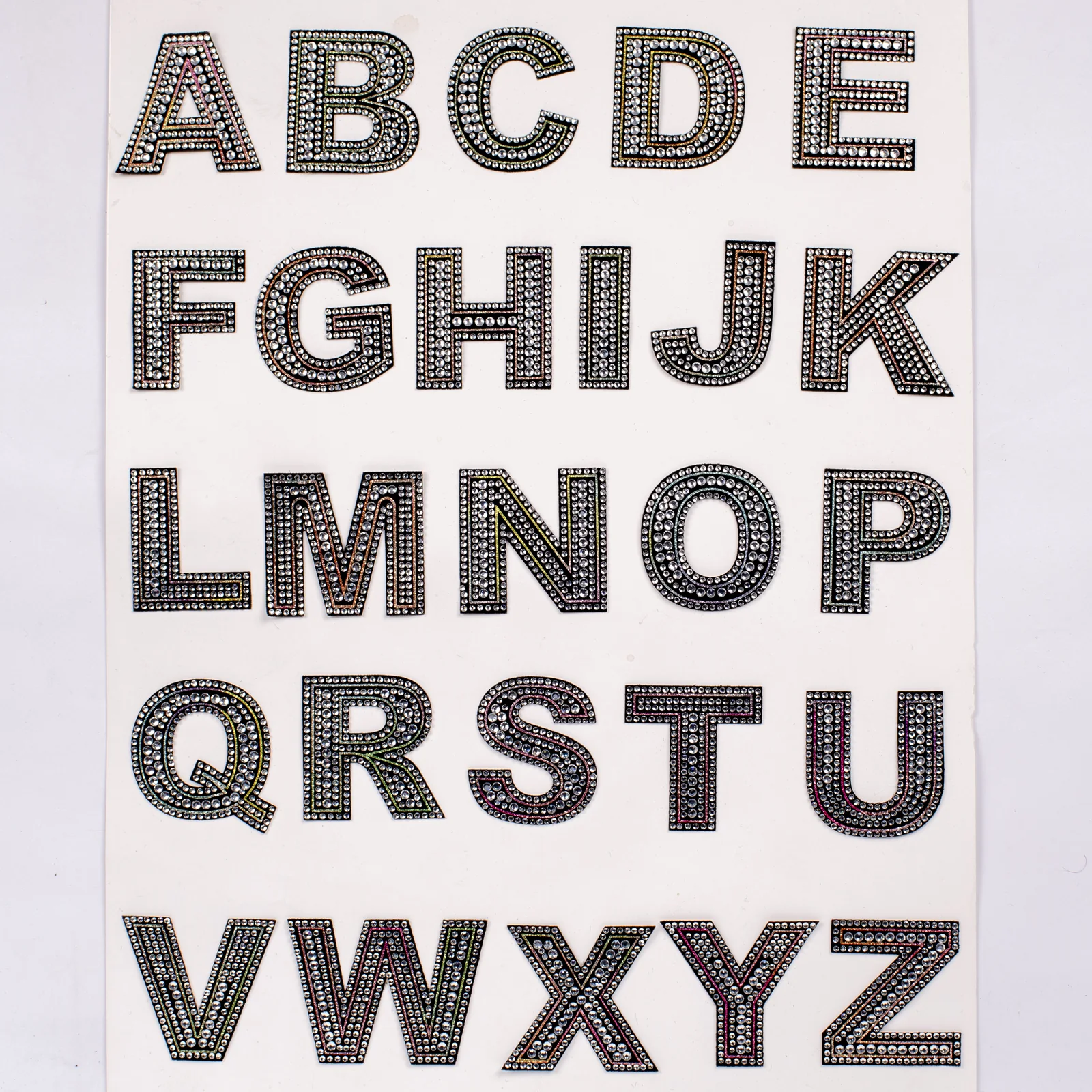
Choose an assertive uppercase alphabet whose black base frames two clear crystal rows. The construction is made for visible initials and readable words, while the letter-by-letter order plan keeps a wholesale run commercially useful.

A dark foundation separates the clear stones from light garments and creates a distinct outline even when the crystals are not directly illuminated.
Parallel round-stone paths reinforce the block form. Inspect corners, counters, joins, and curves on the character sample you actually plan to order.
Names require uneven inventory. Prepare a frequency table, reserve replacements for common letters, and proof capitalization before the purchase order.
Build short names or initials on outerwear while checking placement, garment movement, and production attachment access.
Allocate characters from attendee lists and include a controlled overage for late spelling changes or damaged pieces.
Use single initials on fabric bags and pouches where the black outline provides a deliberate graphic edge.
Sort individual characters into labeled units only when packaging and replenishment rules are stated in the quote brief.
Use LCH-NP-ALP-01 so the double-row round-crystal collection is not confused with another alphabet.
List required quantities beside every letter; the total order must meet the current MOQ of 50 pieces.
Approve stone alignment, textile outline, back construction, attachment trial, spelling, and packing before release.
Each uppercase character uses a black textile silhouette with two visible rows of clear round crystals. That layered border produces a bold block-letter effect that differs from the square-grid and white-base collections.
Current MOQ: 50 pieces. A request should still break the total into quantities for A, B, C, and every other required character so the factory can evaluate the actual assortment.
Yes, the photographed uppercase range supports many names, initials, and short statements. Buyers should proof every final spelling and order spare high-frequency characters before approving the production list.
No. Photography confirms the decorative face, not a universal backing claim. Send the intended garment and process so the current back construction and application route can be confirmed in writing.
The A reference shows the outer silhouette, center opening, and parallel crystal placement around angled strokes.
A dark foundation separates the clear stones from light garments and creates a distinct outline even when the crystals are not directly illuminated.
Parallel round-stone paths reinforce the block form. Inspect corners, counters, joins, and curves on the character sample you actually plan to order.
Names require uneven inventory. Prepare a frequency table, reserve replacements for common letters, and proof capitalization before the purchase order.
Build short names or initials on outerwear while checking placement, garment movement, and production attachment access.
Allocate characters from attendee lists and include a controlled overage for late spelling changes or damaged pieces.
A useful request identifies the exact product family, required characters, quantity per character, receiving item, target placement, destination, and date. Current MOQ: 50 pieces; the written quote confirms the assortment and current terms.