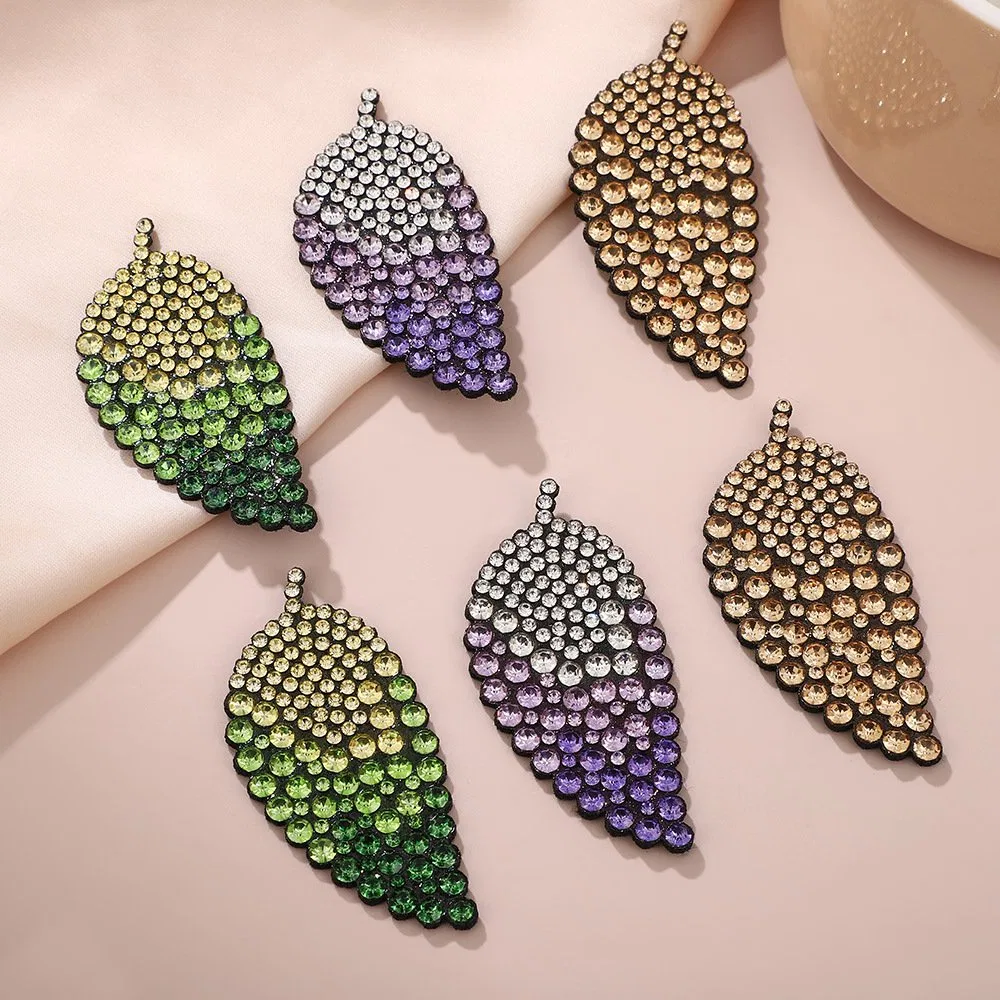
Footwear decoration trial

Rhinestone Leaf Patches for Shoes

Plan rhinestone leaf shoe patches around upper material, paired placement, flex zones, edge shape, and attachment testing.

Buyer perspective

The loose leaf patches illustrate a motif and color range, not an approved shoe application. Footwear uppers curve, flex, and may have coatings or seams that make a flat patch unsuitable. Select the exact shoe model and left-right placement before treating the leaf as a wearable decoration.

Loose rhinestone leaf patch colorways; suitability for a particular shoe upper requires separate testing
Product reference image; confirm your own artwork, material, and placement in a sample.

What to decide

Build a brief that can be tested

01Evidence file

Map both uppers

Photograph the intended shoe from above and side, then mark symmetrical placement on the left and right. Check lace paths, eyelets, seam ridges, and the panel's flex during walking. A leaf tip should not sit where it repeatedly catches.

02Evidence file

Confirm a feasible construction

Ask for the patch reverse and attachment method quoted for that upper material. A product name containing iron-on does not establish heat tolerance on every shoe. Test access and equipment contact without assuming a flat garment press can reach a curved panel.

03Evidence file

Inspect the pair

Apply representative pieces to both shoes by the agreed process. Compare orientation, spacing, edge security, upper condition, and handling after normal movement. Keep the accepted pair and placement measurements for repeat orders.

Specification

Measure the shoe panel before approving a loose leaf patch

The available reference image shows a loose rhinestone leaf, not a finished shoe. A buyer must still prove that the patch fits the selected footwear panel and that an attachment method suits the actual material and flex zone. Treat the photographed motif as an artwork reference only.

Panel footprint
Mark the usable area on each shoe size in the proposed range. Compare maximum leaf width and stem length to stitching, eyelets, folds, and curved edges; a flat paper outline helps expose interference.
Bend location
Position a trial motif on a real shoe and flex the upper as worn. Note any leaf tip or raised stone that falls on a high-bend line or catches on the other shoe.
Method evidence
Have the footwear maker specify an attachment method compatible with that upper. Inspect a completed sample after ordinary handling rather than assuming garment heat-transfer instructions apply to footwear.

No shoe-use claim is established by the loose-patch photograph; approve an attached footwear sample.

Bring to the inquiry

  • Exact shoe model and upper
  • Left-right placement map
  • Quoted patch reverse
  • Applied pair and movement review
Wholesale Inquiry

Request a Bulk Quote

Send your artwork, quantity, destination, and specifications for a tailored quote.

By submitting, you agree to our privacy policy.