Start with the garment
Identify fabric finish, stretch, thickness, and available flat area. Note whether the patch will be washed frequently or handled at its edge. Those facts narrow the useful attachment options.
Compare sewn, heat-applied, and removable patch backing around fabric, placement, handling, and care.
Buyer perspective
Backing is often selected as a checkbox after the patch artwork. It should instead be chosen with the garment in hand. The same badge can be acceptable when sewn to a stable jacket panel and awkward when heat-applied across a seam or made removable without a matching receiving surface.
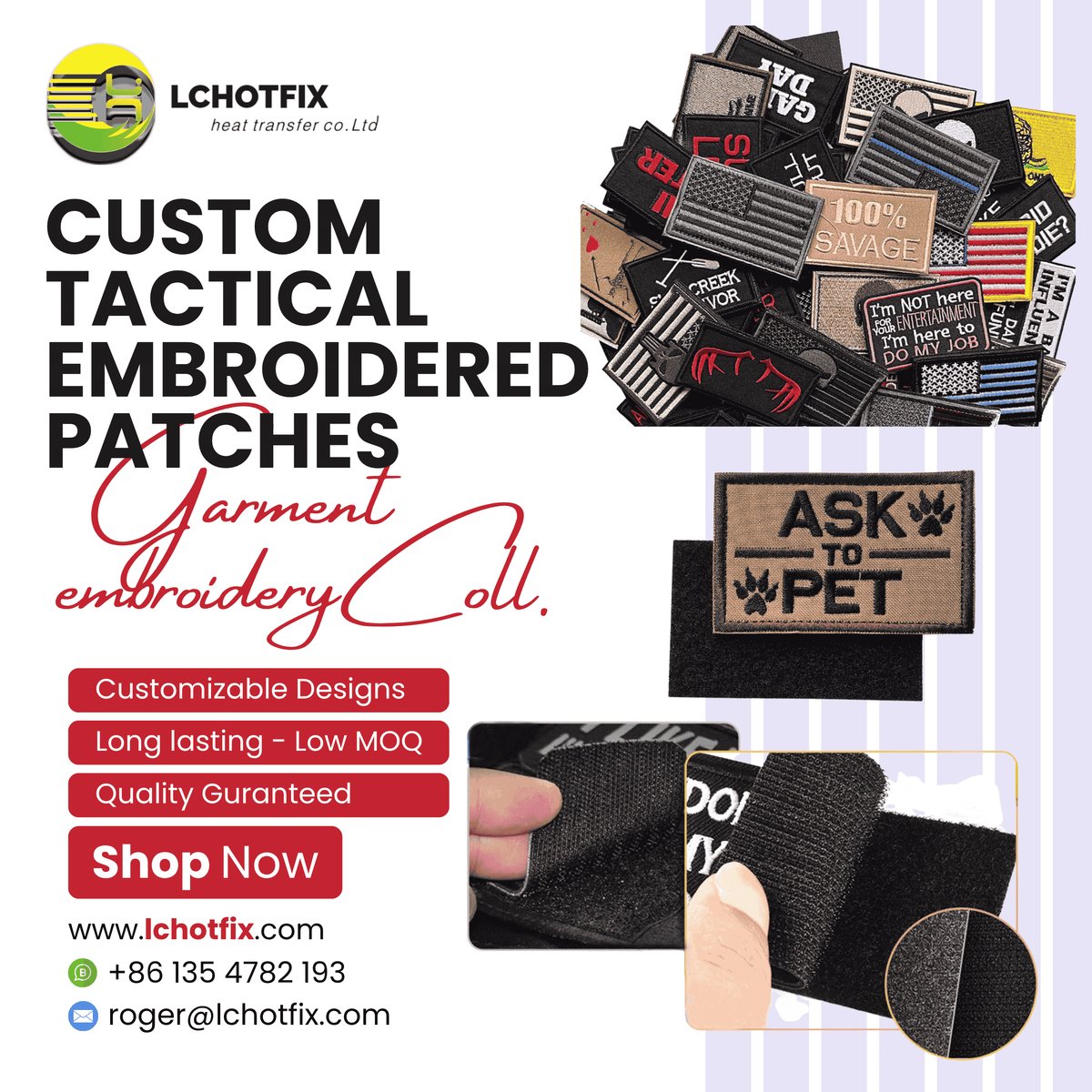
Buying matrix
Backing is part of the patch specification, not a detail to decide after artwork. A permanently attached uniform badge, a heat-applied fashion patch, and a removable panel have different practical needs. Evaluate sewing, heat application, and hook-and-loop against the actual garment construction and intended use.
| Line item | Evidence to record |
|---|---|
| Attachment area | Note seams, linings, pockets, and access to the reverse side of the proposed position. |
| Removal | Decide whether the patch must remain fixed or be swapped without altering the garment. |
| Sample | Attach one of each viable construction to the target item and inspect edge lift, comfort, and appearance. |
State the chosen backing in the approval record alongside the patch size, garment, and placement.
What to decide
Identify fabric finish, stretch, thickness, and available flat area. Note whether the patch will be washed frequently or handled at its edge. Those facts narrow the useful attachment options.
For sewing, inspect stitch allowance and perimeter. For a heat-applied backing, test pressure access and edge lift on the exact fabric. For hook-and-loop, test patch and receiving panel together through removal cycles. Check lining, padding, coating and reverse-side access on each proposed receiving item. After assembly and relevant care, inspect both the visible edge and reverse finish; an unlined shirt trial does not approve a padded bag.
Record backing, patch construction, location, and application instruction alongside the physical sample. If a garment variant changes fabric or placement, do not silently reuse the first backing approval.
Send your artwork, quantity, destination, and specifications for a tailored quote.
FAQ
Backing is part of the patch specification, not a detail to decide after artwork. A permanently attached uniform badge, a heat-applied fashion patch, and a removable panel have different practical needs. Evaluate sewing, heat application, and hook-and-loop against the actual garment construction and intended use. For further detail, consult Choose Patch Backing by Garment Construction.
Identify fabric finish, stretch, thickness, and available flat area. Note whether the patch will be washed frequently or handled at its edge. Those facts narrow the useful attachment options.
For sewing, inspect stitch allowance and perimeter. For a heat-applied backing, test pressure access and edge lift on the exact fabric. For hook-and-loop, test patch and receiving panel together through removal cycles.
Record backing, patch construction, location, and application instruction alongside the physical sample. If a garment variant changes fabric or placement, do not silently reuse the first backing approval. For further detail, consult TPU Patch Attachment Methods: Buyer Comparison.
Choose backing for the tested wear case, not for the convenience of one universal patch. If none of the methods suit the panel, revise the location or badge design.
Compare sewn, heat-applied, and removable patch backing around fabric, placement, handling, and care.
Prepare patch construction and size, garment fabric and panel, removability requirement, and applied sample test. Choose backing for the tested wear case, not for the convenience of one universal patch. If none of the methods suit the panel, revise the location or badge design. The related Rhinestone Letters, Patches & Design Catalog page provides the next sourcing reference.
For Patch Backing Guide: Choose Attachment by Garment, the page's enquiry checklist calls for: Patch construction and size; Garment fabric and panel; Removability requirement; Applied sample test. Keep those fields together when comparing the scope of a LCHOTFIX quotation.
The Patch Backing Guide: Choose Attachment by Garment checklist identifies “Patch construction and size” separately from “Garment fabric and panel”. Record the first requirement explicitly for the chosen version, rather than assuming it follows from the second requirement in a Patch Backing Guide: Choose Attachment by Garment quotation.
For Patch Backing Guide: Choose Attachment by Garment, “Garment fabric and panel” is an explicit enquiry requirement. Identify the relevant version against that requirement and the checklist's “Applied sample test” entry, so the Patch Backing Guide: Choose Attachment by Garment quotation refers to the same defined order scope.