White embroidered perimeter
The border follows outside edges and enclosed openings, giving the crystal field a separate pale frame.
Dense clear-crystal letters finish with a broad white embroidered rim designed to remain visible after sewing.
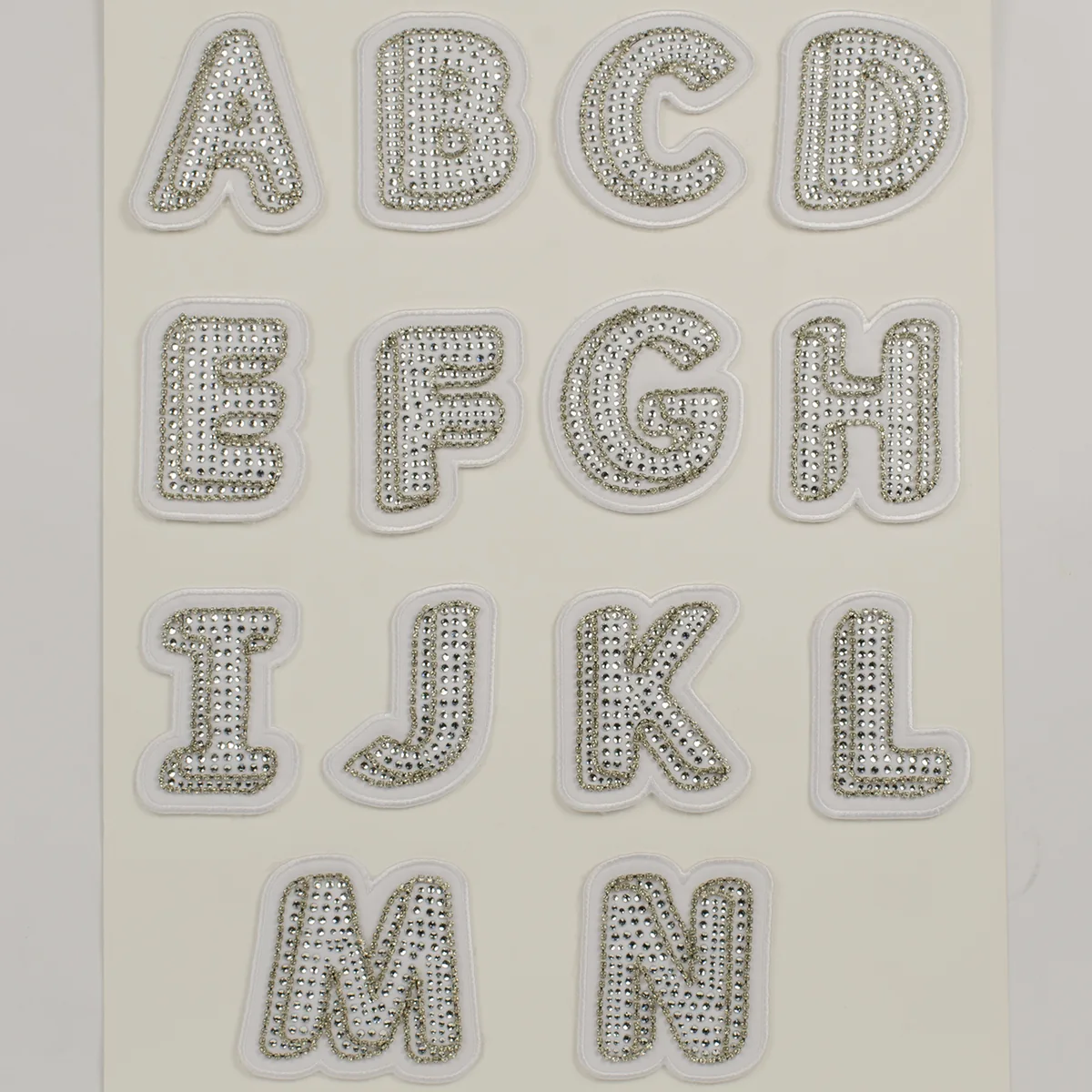
The photographed selection runs from A through N. Close rows of round clear stones sit inside pale letter bodies, surrounded by a visibly raised white embroidered border. Compare the border as an outline and surface texture; its appearance does not establish a usable seam allowance or show how a finished garment has been stitched.
Reference measurements come from the catalog record. The current MOQ is 50 pieces; confirm specifications, price, and lead time in writing before production.
Use the A–N board to compare how a pale stitched rim frames different crystal-filled letter shapes. It is a front-view design reference, not an attachment test.
The border follows outside edges and enclosed openings, giving the crystal field a separate pale frame.
The A–N board shows repeated round stones across the strokes. Their rows bend and shorten to fit curves and narrow areas.
Compare the broad M, narrow I and curved C. The softened corners and pale rim remain visible despite their different stroke patterns.
The board ends at N. It establishes the appearance of the pictured selection, not evidence that every possible character or an entire alphabet is shown.
Record the border and stone layout you selected. A measured stitch path and garment assembly plan require the separate physical-sample review described on the purchasing page.
Identify the letter within the A–N selection and save the view that best shows its border and stone field.
Follow the white outline around a straight edge, corner and opening; do not turn screen proportions into a numerical sewing allowance.
Mark where the inner crystal rows stop beside the rim and how that relationship changes around a curve.
Save the selected letter arrangement with its intended background. Use the separate order resource to define sewing access and assembly responsibilities.
Compare how the pale outline joins visually across several characters when they sit beside each other in a name drawing.
Consider the relationship between the white border and nearby piping or trim without assuming the same color or texture.
Place the selected letter outline on a panel drawing to judge its rounded corners and rim proportion before resolving attachment details.
Share the final name layout and receiving fabric so the white border, crystal field, and sewing position can be judged together. For further detail, consult Sew-On White Crystal Letter Patches Wholesale. For the separate purchasing workflow, see Sew-On Crystal Letter Patch Order Specs.
White stitching traces the full character silhouette and supplies a visible edge for placement.
Closely spaced round crystals occupy most of the inner letter face for a uniform bright finish.
Each uppercase character is cut separately so names and initials can be arranged before attachment.
Rounded corners and the padded-looking white border distinguish this alphabet from hard geometric grids.
Character counts, target height, intended layout, and fabric type are the essential inputs for this quoted letter program.
Provide a placement drawing with every character in its intended sequence.
Evaluate the border proportion and overall letter height against the receiving panel.
Review perimeter continuity and crystal spacing on the sampled character.
Approve grouping by name or alphabet count before the quoted run is packed.
Send your artwork, quantity, destination, and specifications for a tailored quote.