Koala color comparison
The top row repeats a broad-eared, round-nosed silhouette with pink-looking, clear and red outline treatments. Compare the nose and lower garment details as well as the outside edge.
Character silhouettes use sparse colored-crystal outlines rather than a fully covered stone surface.
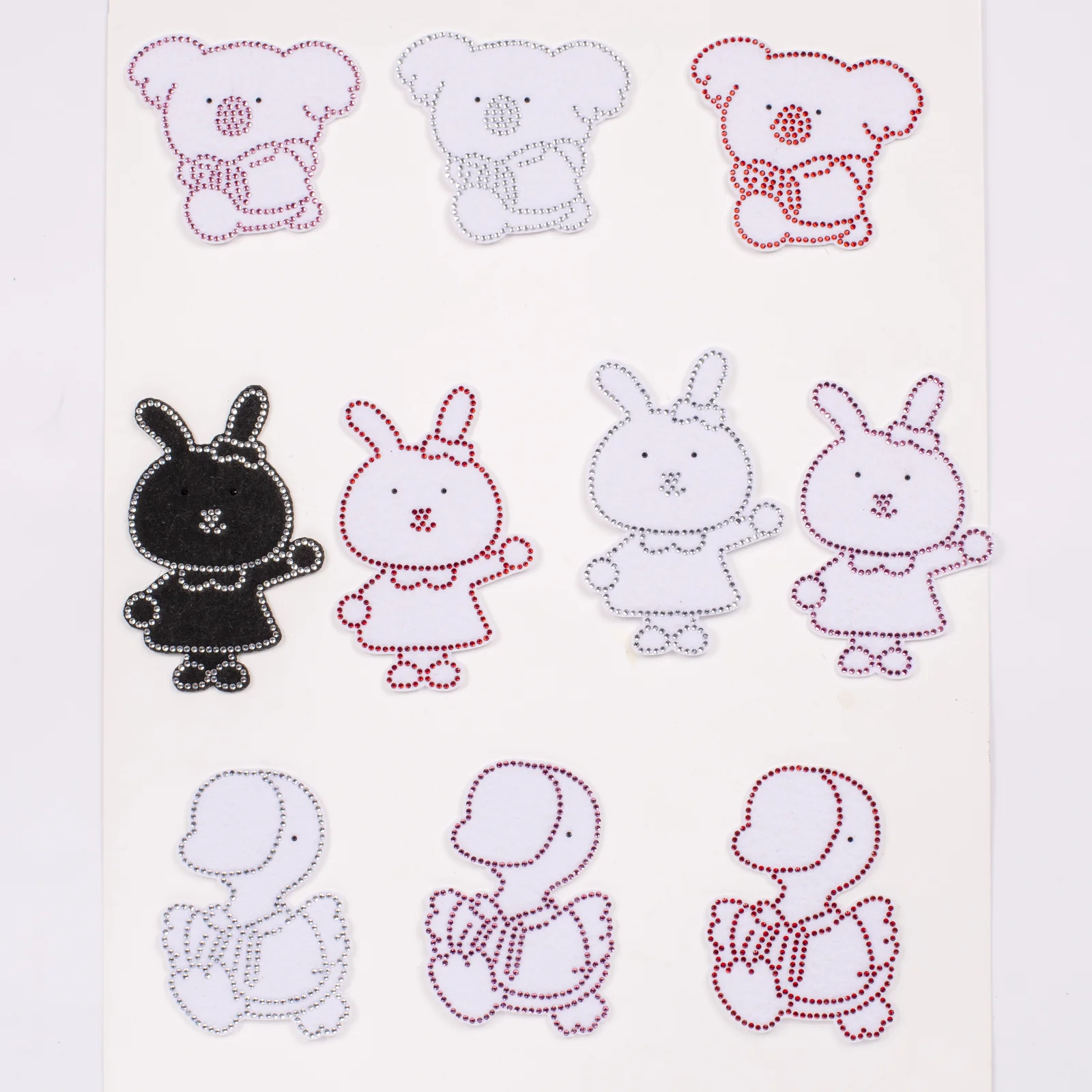
The main board groups koala references across the top, long-ear rabbit forms in the middle and duck forms below. A separate close photograph shows a red-outline character with a long snout and curved tail. Identify that additional silhouette by its picture rather than assuming a species from its file name. Most of each shape remains exposed textile, with crystals defining selected contours and details.
Reference measurements come from the catalog record. The current MOQ is 50 pieces; confirm specifications, price, and lead time in writing before production.
Read the three rows and the separate close view as individual references. The board contains different palettes and base tones, not one interchangeable animal shape.
The top row repeats a broad-eared, round-nosed silhouette with pink-looking, clear and red outline treatments. Compare the nose and lower garment details as well as the outside edge.
The middle row includes a black-base rabbit and pale-base examples. The same sparse outline reads differently when the textile supplies a dark field.
The bottom row separates the projecting beak, rounded head, wing and feet with sparse crystal paths. The open areas are not a fully paved stone surface.
Use the separate red-outline close-up for its long snout, rounded eye positions and curved tail. Keep that selection distinct from the three groups on the display board.
A specific image, pose and color layout make the design choice clear. Use the separate assortment-order resource for quantities, application and other production requirements.
Identify the board position or separate close view. Use an annotated image if the character's name is ambiguous.
Mark the textile tone and crystal paths independently, including facial features and clothing details.
Trace the full ears, beak, limbs or tail when placing the character on a design drawing.
Keep the original photograph with the marked changes. A visual selection does not establish backing, rights or suitability for a particular age group.
Compare projecting ears, beaks and tails against a drawing of the available area. The complete cut shape matters, not only the face.
Choose whether repeated outlines share a palette or deliberately contrast. Use the board's color variations as a visual reference, not a current availability list.
Compare a single isolated character with a group layout. Keep space around protruding limbs so the silhouettes do not merge visually.
Choose the koala, rabbit, or duck-style designs individually rather than treating the display board as a fixed assortment. For further detail, consult Cartoon Animal Crystal Felt Patches Wholesale. For the separate purchasing workflow, see Crystal Animal Patch Assortment Orders.
Crystal paths draw the essential contours and expressions without filling every section of the motif.
Standing and seated animal shapes create distinct choices within one playful visual family.
Each textile base follows its character silhouette instead of using a shared square or circular field.
Pink, red, clear, and dark accents distinguish bows, faces, clothing, and outlines in the photographed set.
The quoted minimum can cover an agreed mix, but shape, base color, crystal palette, dimensions, and units per animal need confirmation.
List base and crystal colors for every selected character detail.
Review facial legibility, contour spacing, and cut shape on the selected sample.
Approve quantities and packing labels for each animal before production.
Place small friendly characters on tops, bags, and accessories designed around playful themes.
Send your artwork, quantity, destination, and specifications for a tailored quote.