01
Face
Authorized artwork or catalog code, silhouette, front treatment, rhinestone colors and placement, and any non-stone detail.
A charm is a system of body, rhinestones, backing or soft component, hardware, attachment, movement, and packing. Build the brief around the full hanging assembly so the approved sample—not a cropped front image—defines the result.
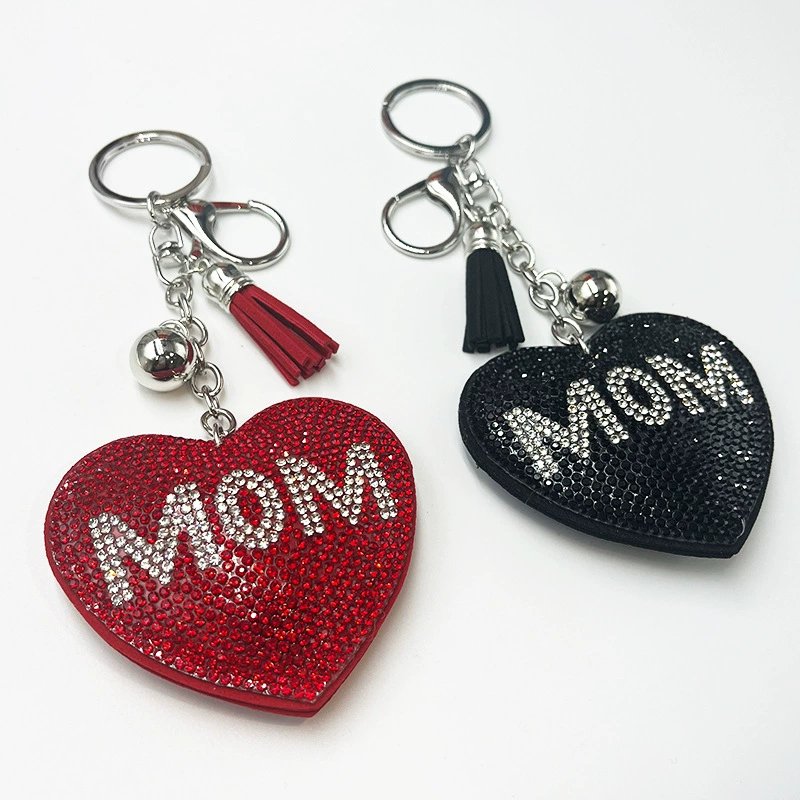
Review the charm as an object that will be handled, hung, packed, and seen from more than one angle. Each layer needs a named material, dimension, finish, and approval point.
Authorized artwork or catalog code, silhouette, front treatment, rhinestone colors and placement, and any non-stone detail.
Base and backing materials, edge treatment, thickness where relevant, reverse appearance, and soft or rigid construction.
Ring, clasp, loop, chain, tassel, or other hardware; finish, dimensions, opening, orientation, and intended attachment point.
Individual packing, backing card or label request, orientation, surface protection, carton plan, and destination.
Metal, rhinestones, Korean velvet
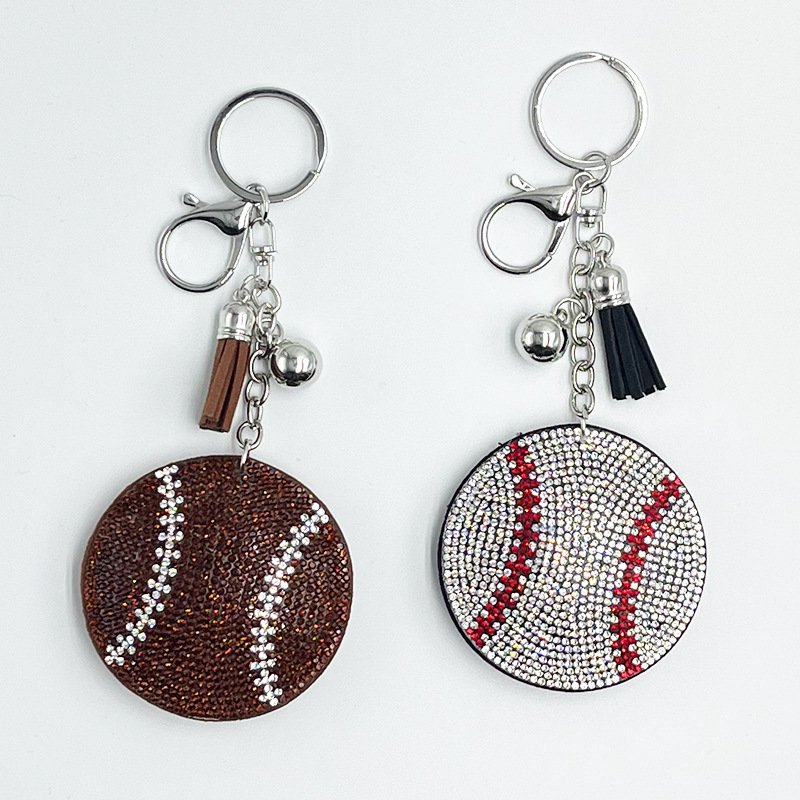
Metal, rhinestones, suede
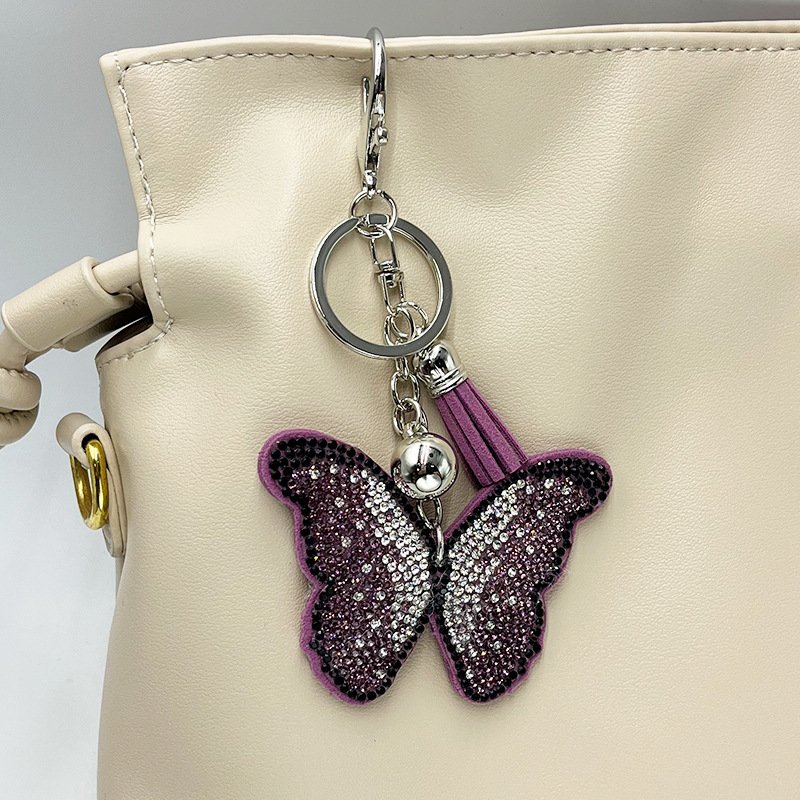
Metal, rhinestones, and tassel
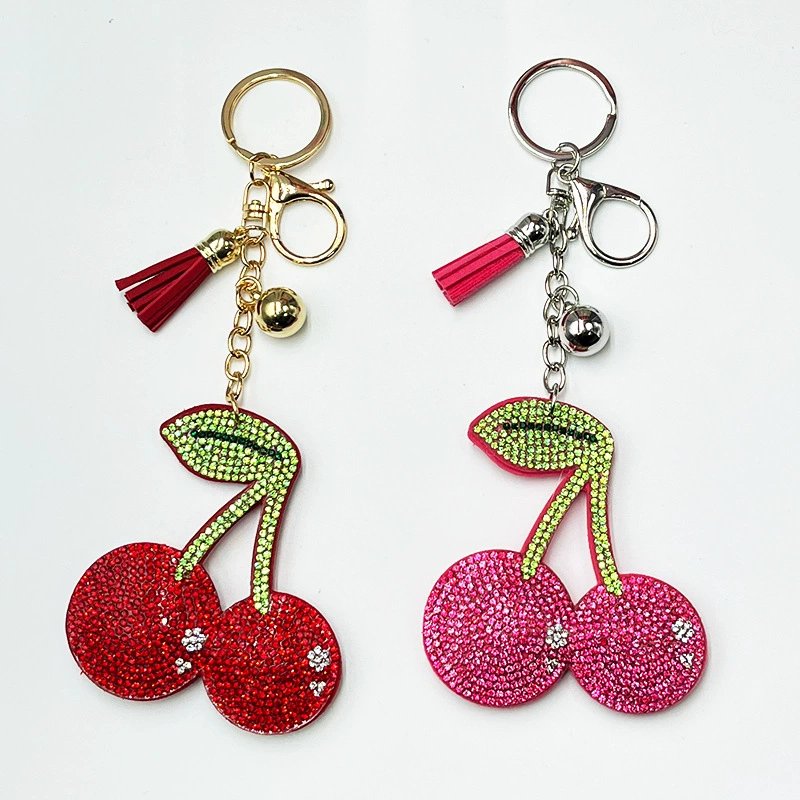
Metal and rhinestones
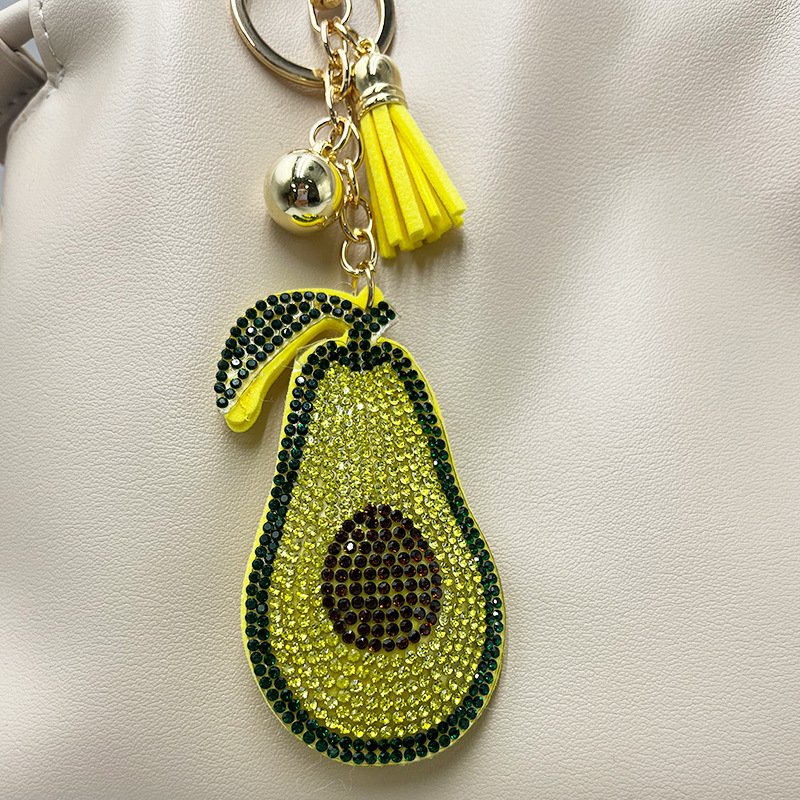
Rhinestones, PU leather, and alloy hardware
The displayed quantities, dimensions, and materials are recorded for the listed catalog codes. They do not establish current availability or terms. Current MOQ: 50 pieces. For a fresh charm order, specify the requested changes to the photographed code and ask for a written sample, tooling, pack, price, and delivery plan.
A body measurement alone does not show how the charm hangs. Mark the body, hardware, connector, tassel or extension, attachment opening, orientation, and total length. Include front, back, side, and assembled views where they affect approval.
Plan minimums across several designsSend a logo file you are permitted to place on a bag charm. Describe the charm silhouette, measurements, base material, stone map, colors, tassel or ring hardware, quantity, and individual packaging. Ask the factory to identify tooling, sample work, and current terms for that configuration.
The five photographed charm records each list a historical 100-piece minimum. Current MOQ: 50 pieces. A new price depends on the selected shape, tassel, connector, stone finish, packing, and whether the recorded construction remains available.
Show the finished body width and height or diameter, thickness where relevant, tassel or extension length, hardware dimensions, attachment opening, and the overall hanging length. Identify which dimension excludes loose or moving components.
Approve the exact artwork or catalog code, silhouette, dimensions, materials, rhinestone color and placement, front and back appearance, hardware, attachment movement, tassel or soft component, sample, packing, quantity, and written commercial terms.
Review the charm as an object that will be handled, hung, packed, and seen from more than one angle. Each layer needs a named material, dimension, finish, and approval point.
Authorized artwork or catalog code, silhouette, front treatment, rhinestone colors and placement, and any non-stone detail.
Base and backing materials, edge treatment, thickness where relevant, reverse appearance, and soft or rigid construction.
Ring, clasp, loop, chain, tassel, or other hardware; finish, dimensions, opening, orientation, and intended attachment point.
Individual packing, backing card or label request, orientation, surface protection, carton plan, and destination.
A body measurement alone does not show how the charm hangs. Mark the body, hardware, connector, tassel or extension, attachment opening, orientation, and total length. Include front, back, side, and assembled views where they affect approval.
Have an annotated drawing or physical reference? Send it with the inquiry form.