Simplest comparison
One design, one specification
List the sample and bulk quantity, one finished size, one construction, one color set, packing, and destination.
A useful RFQ separates artwork, size, material, color set, construction, sample quantity, and bulk quantity. It does not assume one catalog minimum applies to every transfer.
Current MOQ: 50 pieces. Availability, pricing, and consolidation are confirmed by the written quote.
These records show why a buyer should identify every item separately. The full Designs catalog contains additional references and item codes.
| Item code | Recorded reference | Material | Recorded size | Recorded MOQ |
|---|---|---|---|---|
| TB-65107DD80631 | Hotfix transfer for shirts and hoodies | DMC rhinestone | 30 × 21 cm | 50 pieces |
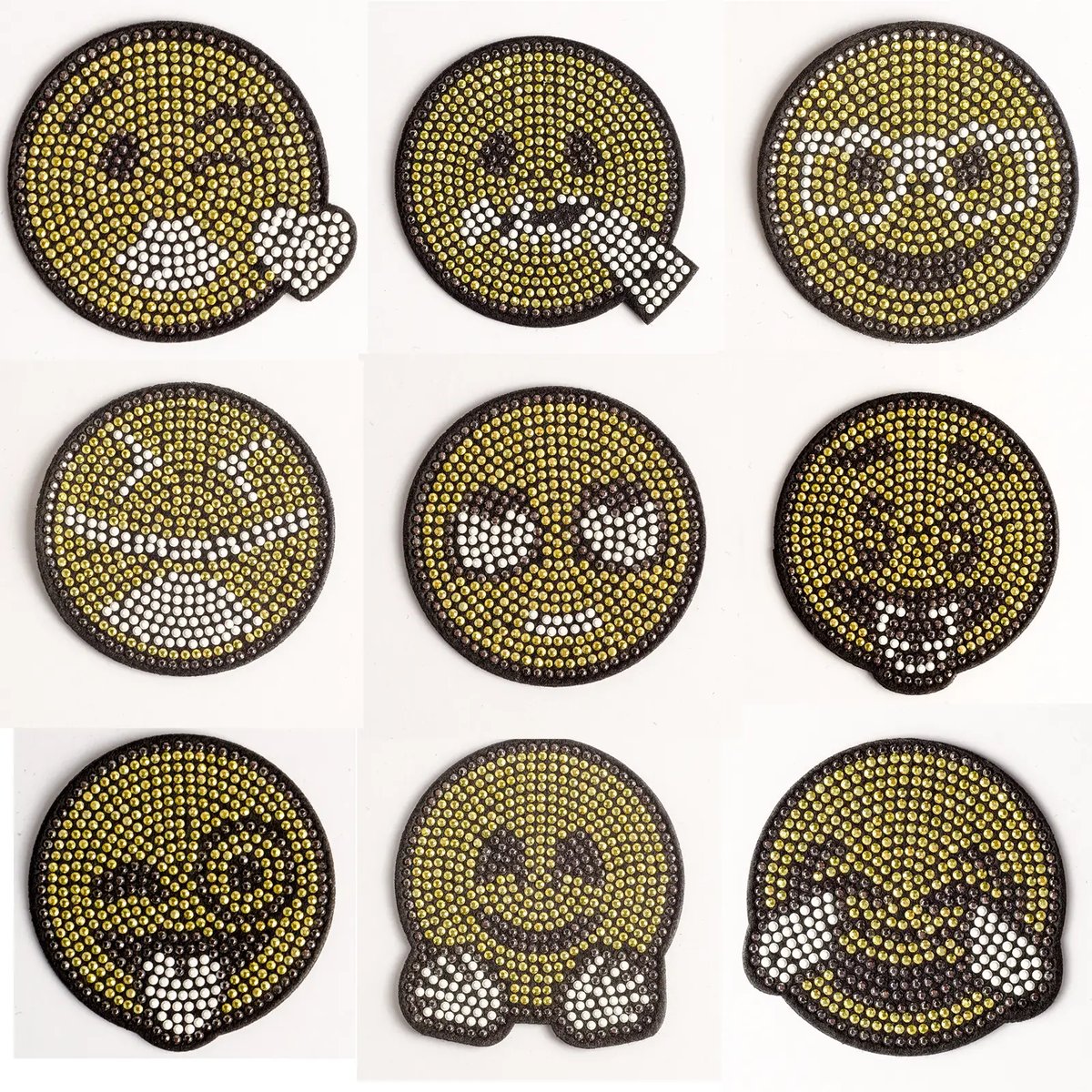
| TB-F5FA8EDBA220 | Smile-face hotfix motif | Rhinestone and felt | 6.3 × 6.3 cm | 100 pieces |
| YW-QS-001 | Bear rhinestone iron-on patch | Rhinestone and felt | 4.3 × 5.2 cm | 200 pieces |
| YW-QS-006 | Rhinestone pearl-heart patch | Rhinestone and felt | 4.3 × 3.5 cm | 300 pieces |
Catalog figures are tied to the named items and may change. They do not establish current terms for custom work or other designs. The site-wide current MOQ is 50 pieces; submit variant quantities so the response can state whether the proposed mix qualifies and what is included in the price.
List the sample and bulk quantity, one finished size, one construction, one color set, packing, and destination.
Separate every change in size, color, material, stone layout, carrier, or receiving product so shared setup can be evaluated.
Give every design its own code, file, specification, sample need, quantity, and packing line. Ask whether shipment consolidation is available.
Confirm what counts as one design and one production specification. Then request written quantity breaks against that unchanged reference. The wholesale ordering guide explains the wider commercial brief.
Current MOQ: 50 pieces. Do not assume multiple designs can be mixed to meet that total without review. List each artwork, size, material, color set, construction, and quantity separately so any consolidation can be confirmed in the written quote.
The records describe specific historical items with different constructions, materials, sizes, and production requirements. Current MOQ: 50 pieces; availability, design mix, and other order terms still require confirmation.
List the sample quantity, bulk quantity for every design and specification, expected size or color splits where relevant, repeat-order estimate if known, packing scope, destination, and target date.
These records show why a buyer should identify every item separately. The full Designs catalog contains additional references and item codes.
List the sample and bulk quantity, one finished size, one construction, one color set, packing, and destination.
Separate every change in size, color, material, stone layout, carrier, or receiving product so shared setup can be evaluated.
Give every design its own code, file, specification, sample need, quantity, and packing line. Ask whether shipment consolidation is available.
Confirm what counts as one design and one production specification. Then request written quantity breaks against that unchanged reference. The wholesale ordering guide explains the wider commercial brief.
More general answers about samples and multi-design orders appear in the wholesale FAQ. Browse the transfer category for broader construction guidance.
Add artwork, dimensions, construction, sample needs, bulk quantities, destination, packing, and target date so the response can be order-specific.
More general answers about samples and multi-design orders appear in the wholesale FAQ. Browse the transfer category for broader construction guidance.
Add artwork, dimensions, construction, sample needs, bulk quantities, destination, packing, and target date so the response can be order-specific.