Soft character
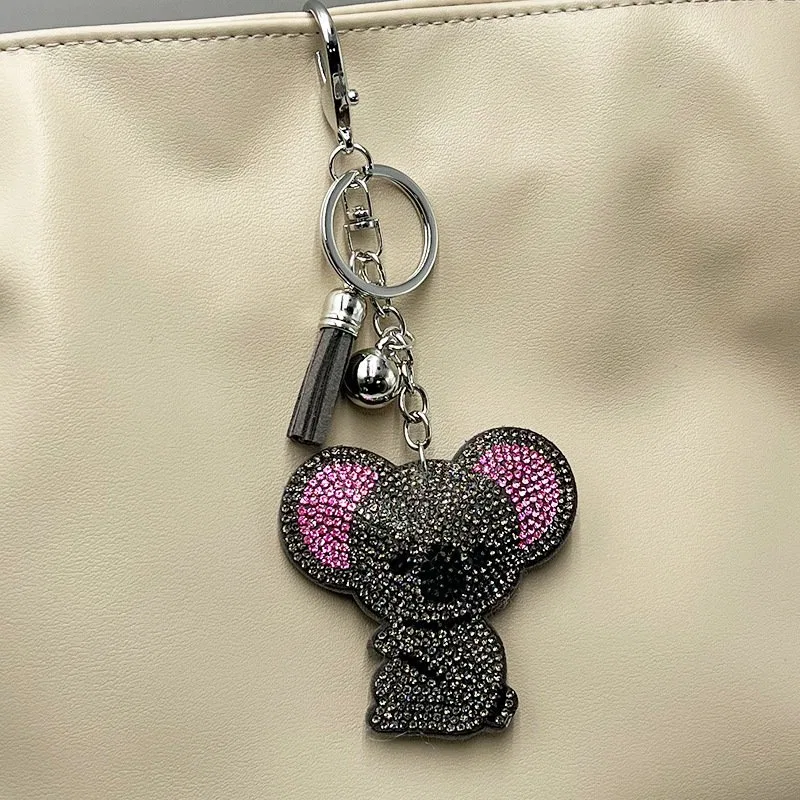
Koala, frog, panda-adjacent shapes
Rounded outlines, friendly proportions, high impulse appeal to gift and youth buyers. Coverage is generous because the outline has few tight interior angles.
Every animal charm is a compression problem. A koala has an ear, an eye and a nose; a rooster has a comb and a tail. Each of those features has to hold at least one clearly separated crystal at the finished size, or the shape stops reading as that animal and becomes an abstract blob on a keyring.
These three groups look adjacent on a catalog page and behave completely differently in a retail environment. Group them correctly in the range plan and each one earns its shelf space. Mix them and the display reads as a jumble.
Koala, frog, panda-adjacent shapes
Rounded outlines, friendly proportions, high impulse appeal to gift and youth buyers. Coverage is generous because the outline has few tight interior angles.
Highland cow, rooster, farm shapes
Sells to a country and homeware audience rather than a fashion one. The character sits in a single distinguishing feature that must never be scaled down.
Zebra heart, leopard heart
A plain base carrying a printed rhythm. Manufacturing is straightforward; the design work is re-tuning the pattern scale for every finished dimension.
2.6 × 2.9 in · minimum confirmed by quote
Rounded outline, few interior cut-ins. The easiest silhouette in this family to hold coverage on.
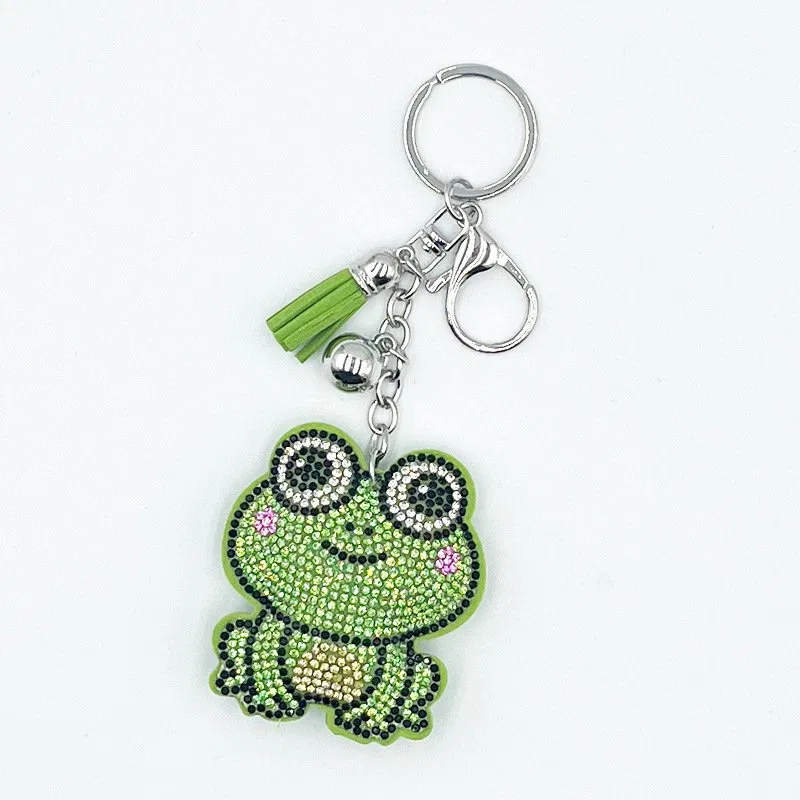
2.7 × 2.3 in · minimum confirmed by quote
Two-colour body and eye contrast. A good test piece for how cleanly a colour break can be set.
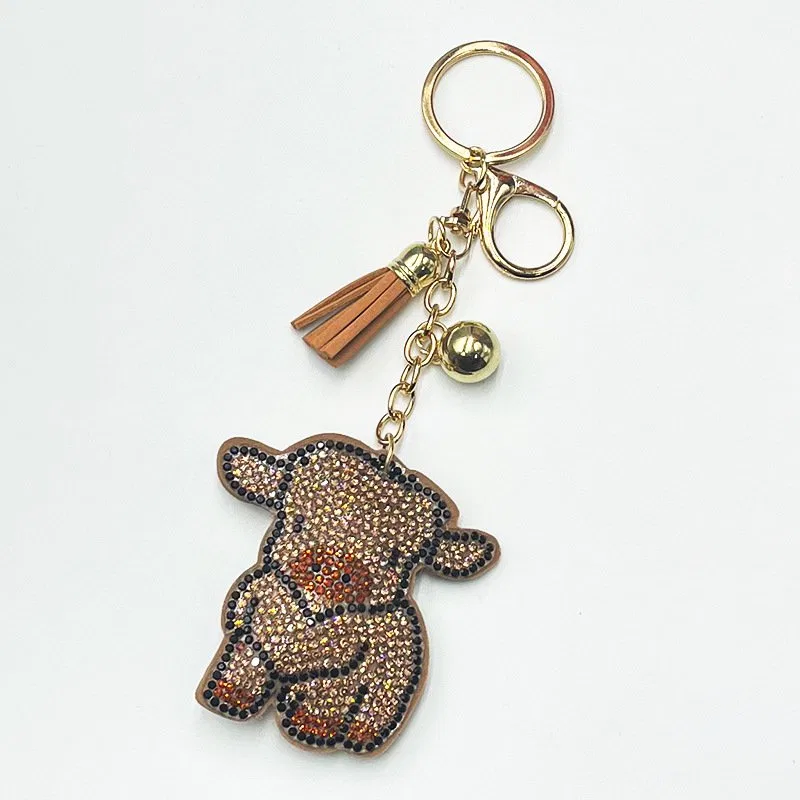
1.6 × 2.5 in · minimum confirmed by quote
Fringe detail sits above the eye line. Preserve the shown height when this facial detail is required.
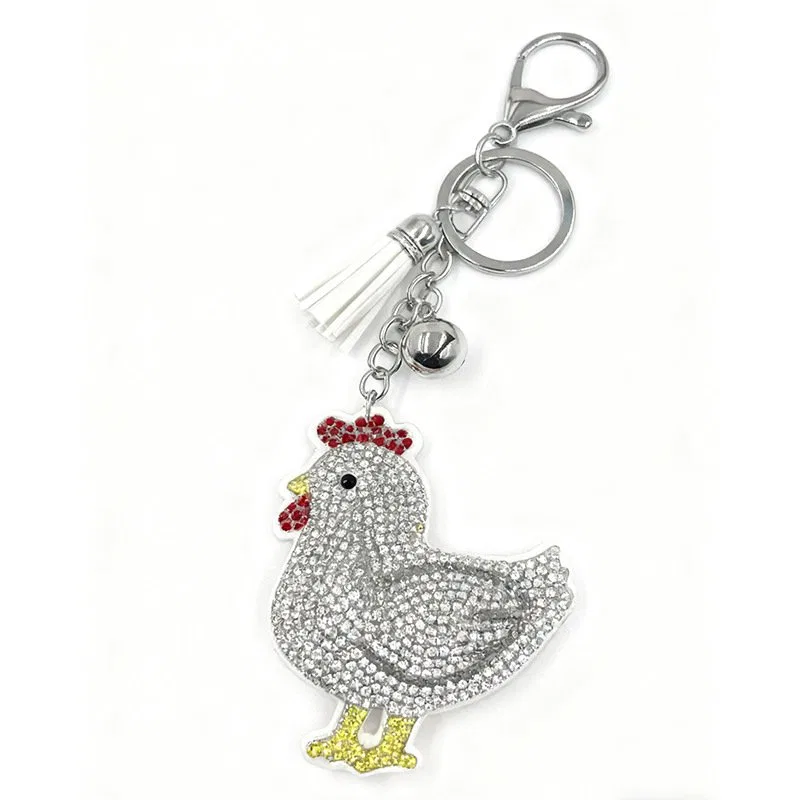
2.0 × 2.3 in · minimum confirmed by quote
Comb and tail carry the character. Both are narrow zones and need a firm base under them.
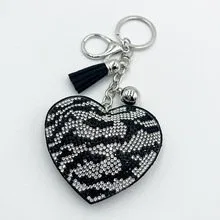
2.4 × 2.2 in · minimum confirmed by quote
Print charms sell to a different buyer than creature charms. Stripe rhythm is the whole design.
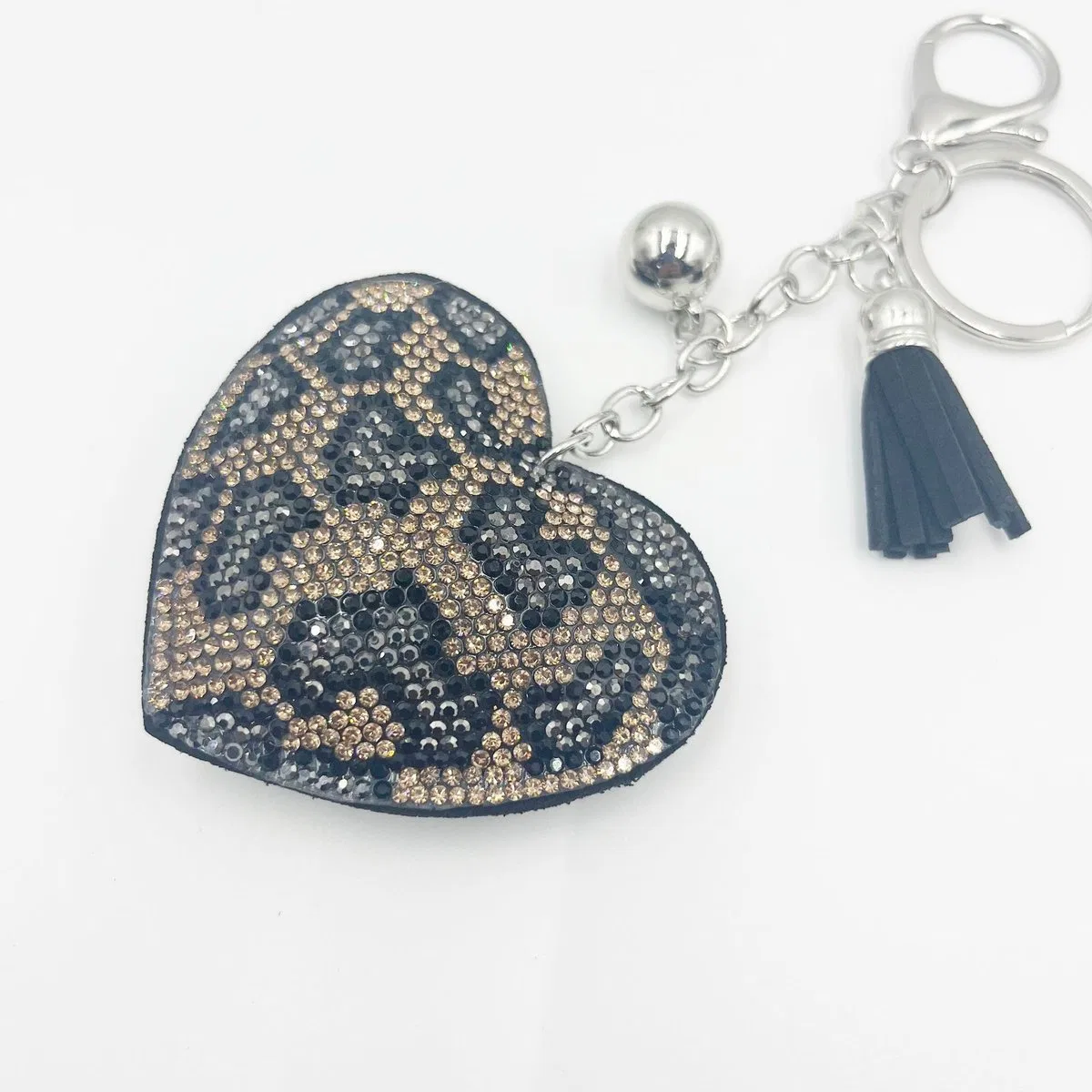
2.6 × 2.3 in · minimum confirmed by quote
Spot scale has to be tuned to the finished width, otherwise the print reads as random noise.
Animal charms sit closer to licensed character merchandise than any other novelty category, which makes them the category most likely to be halted during artwork review. A recognisable published character, a studio illustration style or a registered mascot cannot be reproduced on the strength of a purchase order.
Provide either proof that your organization may reproduce the design or an original silhouette drawn for the brief. Generic animal forms developed from scratch avoid copying a published character, which is why these examples use independent creature shapes rather than recognizable likenesses.
Only if the buyer owns or licenses it. Published characters, mascots and illustration styles belong to somebody, and a purchase order is not a licence. Send written confirmation of the rights position with the artwork, or commission an original silhouette that does not trade on an existing property.
The character lives in three or four features: an eye, an ear, a snout, a tail. Once the finished width falls to a point where those features cannot each carry at least one clearly separated stone, the charm stops reading as that animal. The listed sizes in the table below are the tested lower bound for each silhouette.
Print is harder to get right and easier to manufacture. The setting work is simple because the base is a plain heart or circle, but the spot or stripe rhythm has to be redrawn for every finished size. A leopard pattern that looks correct at 2.6 inches becomes visual noise at 1.5 inches.
Minimum quantities vary by item, silhouette, and colourway. Send the proposed quantity for each design; the current written quote will confirm which assortment can be produced.
Shapes with protruding features such as ears, tails and combs sit differently on a ring and knock against each other in a display bowl. For these, a slightly longer chain drop and an individual polybag reduce edge damage in transit and on the shop floor.