01
Silhouette
Print the logo at its requested width and place it on the garment. Check that the outer contour still fits between seams and nearby details.
Record the overall width, height and garment position.
A rhinestone logo is assembled from individual stones. A thin printed line may need a wider path, and the opening inside a small letter can disappear when stones are placed around it. Send your authorized logo at its intended size so LCHOTFIX can review the outline, gaps and garment placement before preparing a sample.
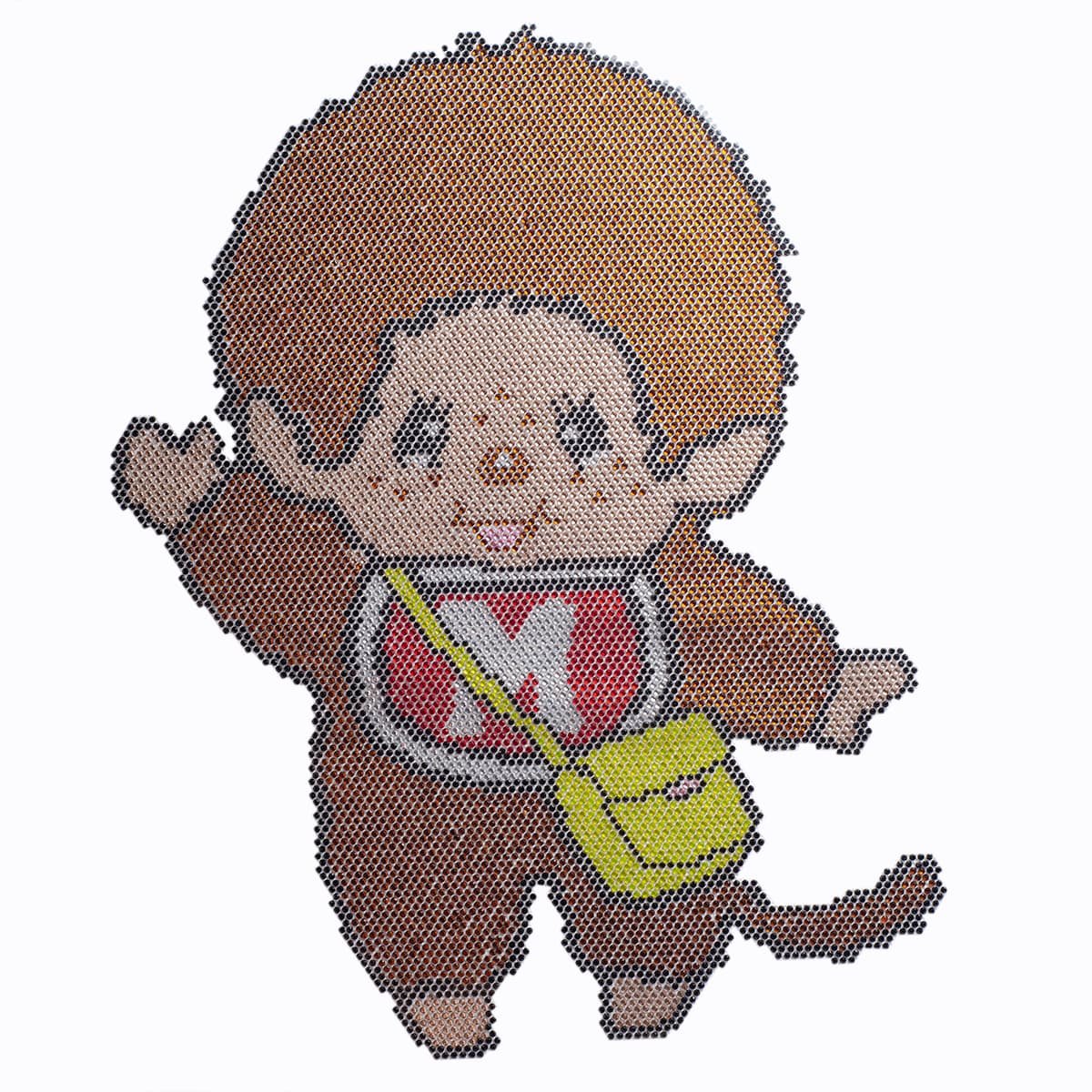
TB-65107DD80631 is the catalog example shown here: DMC rhinestones in a 30 × 21 cm reference layout. Your logo needs its own dimensions and stone map. Current MOQ: 50 pieces; confirm the selected construction and delivery terms in the quote.
Compare the original artwork and the proposed stone layout at the same printed size. Review the outside contour first, then look at letter openings, line endings and color boundaries. Mark every change that needs approval.
Print the logo at its requested width and place it on the garment. Check that the outer contour still fits between seams and nearby details.
Record the overall width, height and garment position.
Look inside letters such as A, B and R. If a stone fills the opening, the mapped version needs a larger gap, smaller stones or an approved simplification.
Mark changed letter openings on the artwork revision.
Follow each curve and corner in the layout. Abrupt changes in spacing or stone diameter can make a smooth source line appear broken.
Review stone positions on the full-size production map.
Compare the chosen stones on the actual shirt color. A pale crystal boundary and a dark fill can read differently on black fabric than on white.
Keep the accepted stone colors with the garment sample.
Attach the logo you are authorized to use. Include editable paths and identify any lettering that must remain unchanged.
Write the overall width and height with units. If several garment sizes need different layouts, list each layout separately.
Name the fabric composition, color and stretch. Supply the exact blank or a fabric swatch when arranging an application sample.
Measure from a fixed feature such as the center front or neckline. Show seams, pockets and hardware near the transfer area.
Give quantities for every logo size and color combination, plus the destination country and required arrival date.
Name the person who signs off the logo map and applied sample. Keep revisions together so an earlier drawing is not used by mistake.
Stones have individual diameters and need space between them. A narrow stroke, sharp corner or small letter opening in print may not survive the same-size stone layout. Review any enlarged gaps or simplified details on the proposed map before approving the logo.
It is a DMC rhinestone transfer reference recorded at 30 x 21 cm. The image illustrates one transfer construction and scale. A new logo requires its own measured artwork and stone positions; those reference dimensions do not automatically apply to your design. For further detail, consult Custom Rhinestone Logo Transfers: Keep the Mark Legible.
Attach the authorized logo with editable vector paths where available, and include a preview showing the intended appearance. Write the finished width and height with units, identify the artwork revision and mark any brand detail that cannot be changed.
Print the proposed stone map at the requested size and examine counters inside letters such as A, B and R. If stones close an opening, ask for a revised gap, stone size or approved simplification. Check the applied sample from the intended viewing distance too.
Yes. Put the selected stones or applied sample against the garment color and view it in the lighting relevant to the product. Record the accepted stone references and fabric together, particularly when the logo relies on pale outlines or dark internal detail.
Only after checking its proportions and clearances on the size range. Measure around necklines, seams and pockets on the smallest receiving garment. If several logo sizes are needed, quote and approve each map with its own dimensions and quantities.
Request instructions for the selected transfer and receiving fabric. Record the actual time, temperature, pressure and peel method during the trial, then inspect the cooled logo and complete the agreed care checks before approving production settings.
List each stone-color combination and finished logo size separately, with the quantity for that version. LCHOTFIX currently states a 50-piece MOQ; ask the quote to identify the applicable minimum and sampling requirement for your particular layout.
Record the artwork revision, overall dimensions, stone positions, stone colors and orientation. Link that map to the approved garment placement and applied sample. Any later change should receive a new approval before the revised transfer is produced.
Send the authorized artwork, finished measurements, fabric details, placement and variant quantities. Include the delivery country, required arrival date and packing needs, and identify who can approve revisions and the sample on behalf of your brand.