01
Relief map
Mark the raised, recessed, flat, layered, or separated regions and identify which details are essential.
Turn flat artwork into a specified raised mark for garments, bags, caps, or accessories. Control the relief, edge, color boundaries, attachment, placement, and sample—not merely the logo file.

The visual file shows the mark. The production brief explains how that mark becomes a physical component.
Mark the raised, recessed, flat, layered, or separated regions and identify which details are essential.
State width, height, outline, orientation, corner treatment, intended thickness, and placement space.
Provide color references and describe matte, gloss, texture, or another requested surface for review.
Identify heat-applied, adhesive, sew-on, or another route plus the exact receiving material.
Attach the logo, dimensions, colors, receiving product, placement, attachment preference, design quantity, and destination.
Review relief, minimum detail, edge, material combination, backing, expected application, and any requested test or documentation.
Compare the sample with the written specification and intended receiving material before authorizing bulk work.
TPU · 7.5 cm reference · recorded catalog MOQ 500
Open the design catalog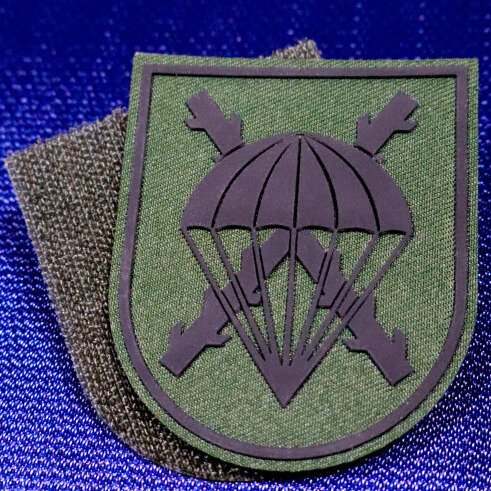
For DG-ZK-002: 5 cm, recorded TPU silicone material, historical minimum 300
Open the design catalogRecorded catalog size and MOQ figures describe those item references only. Custom construction, size, price, sample, timing, and terms are confirmed in writing. Current MOQ: 50 pieces.
For heat-applied soft branding, also compare silicone heat-transfer patches. For approval controls, review the factory workflow.
The submitted artwork is interpreted as a controlled relief with raised, recessed, or layered areas. The feasible height, edge, line detail, surface, and color separation depend on the design, dimensions, material construction, and production review.
For a raised TPU logo, provide a file that your organization has the right to reproduce; do not send an unlicensed mark. Vector paths help the factory inspect shape and color boundaries. Include final width and height, color references, intended relief, receiving product, placement, attachment preference, quantity, destination, and target date.
Request the intended attachment in the brief. Feasibility depends on the patch construction and receiving material. The team should confirm the selected backing, application method, instructions, and material test before approval.
No. DG-ZK-001 records a 7.5 cm reference and a catalog MOQ of 500; DG-ZK-002 records a 5 cm reference and a catalog MOQ of 300. Those figures describe the older items, not this project. The current MOQ is 50 pieces; obtain a written quotation for the new relief design, sample scope, price, and terms.
The visual file shows the mark. The production brief explains how that mark becomes a physical component.
Mark the raised, recessed, flat, layered, or separated regions and identify which details are essential.
State width, height, outline, orientation, corner treatment, intended thickness, and placement space.
Provide color references and describe matte, gloss, texture, or another requested surface for review.
Identify heat-applied, adhesive, sew-on, or another route plus the exact receiving material.
Attach the logo, dimensions, colors, receiving product, placement, attachment preference, design quantity, and destination.