Colored core
Check glass stone size, orientation and face color at actual scale.
Linear border study / TB-RTC-RHC-065
Each narrow rectangular glass stone sits within a halo of clear crystals. In wholesale planning, the buyer should approve center color, halo balance and straight-line repeat at the intended edge width.
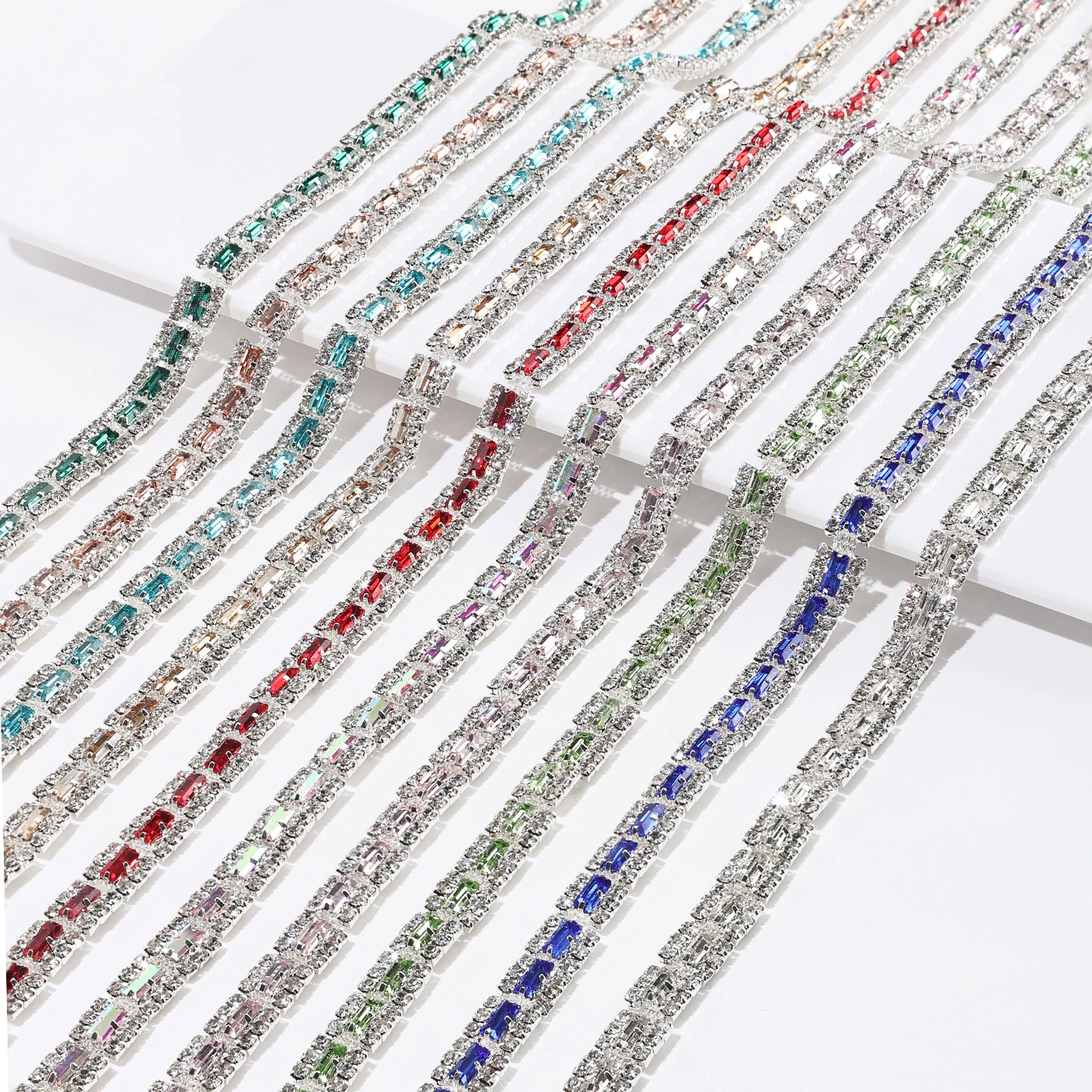
Check glass stone size, orientation and face color at actual scale.
Compare crystal spacing at corners and on the long sides.
Inspect the connection between framed units on both faces.
Measure the furthest crystal point, not only the center stone.
Blue, red, green and pale-toned rows appear in the reference. Approve one physical row per selected color under normal light. On a busy fabric, ensure the clear outline does not merge into the ground.
The source shows about 0.8 cm motif width and approximately 90 cm per listed length. Ask for the outside halo width, repeat pitch and actual sample length before cutting a garment layout.
Record the selected copper-base finish separately from the center color. The quoted combination must match the physical master.
Current MOQ: 50 pieces; confirm unit length, composition and commercial terms in writing.
Check for lifted corner crystals and bent links after a representative packing trial. Keep lengths separated if the supplier's chosen package otherwise lets halos catch on one another.
One signed segment should show the exact center color, clear halo, base finish, outside width and approved end treatment.
The reference records colored glass centers, clear crystal halos and a copper base. Specify the chosen center color and the visible base finish as separate fields so a new plating appearance is not confused with a different base material.
Request a current material statement for the quoted version and retain a labeled sample segment. The image alone cannot verify finish thickness or performance after attachment.
The marquise crescent trim reference uses curved clusters in place of straight rectangles. See more rhinestone chains and trims.
The source says about 0.8 cm motif width without a dimensioned diagram. Measure outside halo-to-halo width and the center stone separately on the approved sample.
The photograph shows separate color rows. A custom alternating sequence would need its own artwork, sample and written availability confirmation; do not infer it from the display.
The frozen source identifies a copper base. Request the selected finish and any composition statement needed for your own specification, as finish color alone is not proof.
Quote TB-RTC-RHC-065 with your selected color and measured border route.