T-shirt front
Check neck drop, chest width, and the smallest garment size before selecting the center line.
Full-character placement · TB-65107DD80631
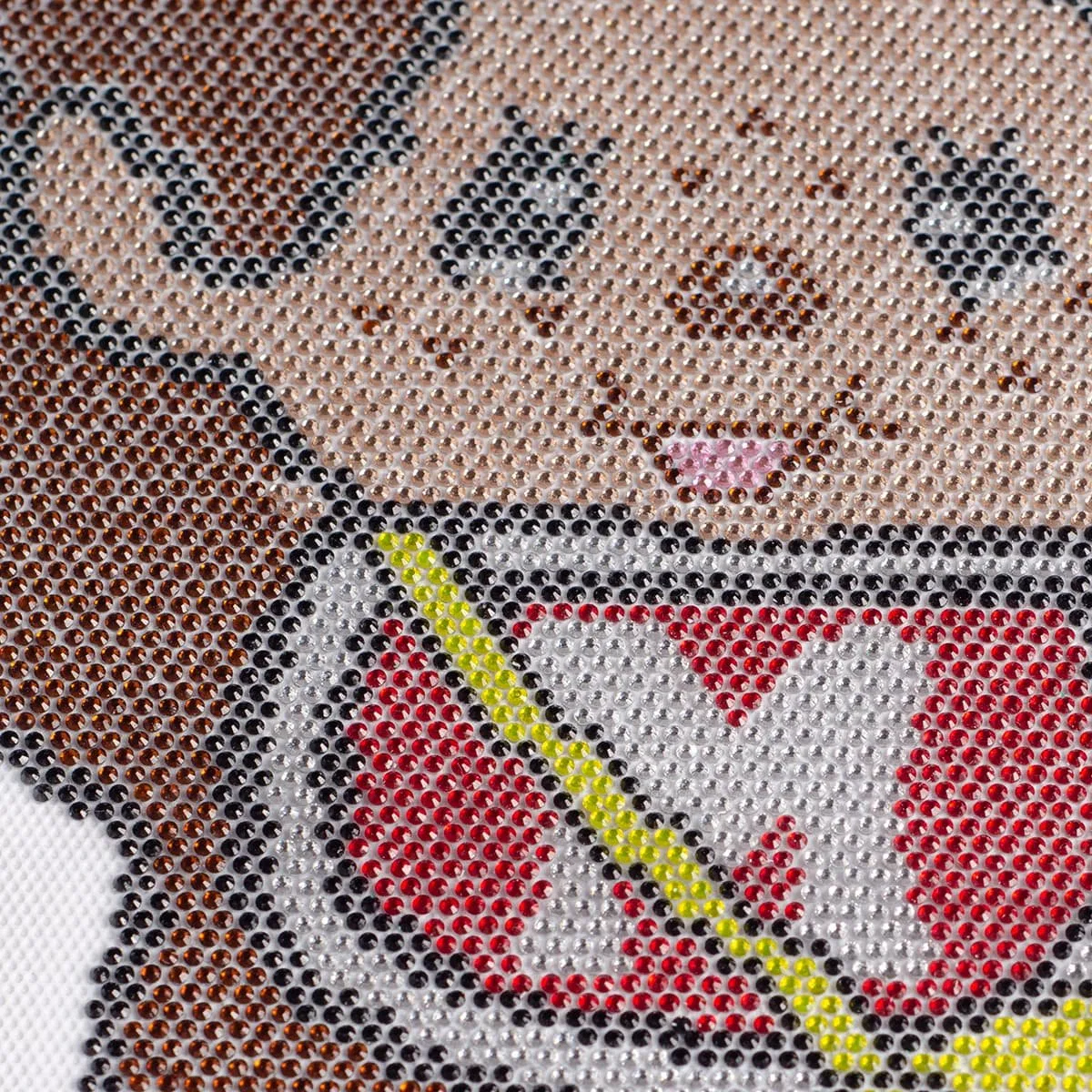
The pictured traveler is a 30 × 21 cm DMC rhinestone composition—not a small chest emblem. Its brown clothing, orange hair, sign, and green bag need room to read as one illustration on a finished tee or hoodie.
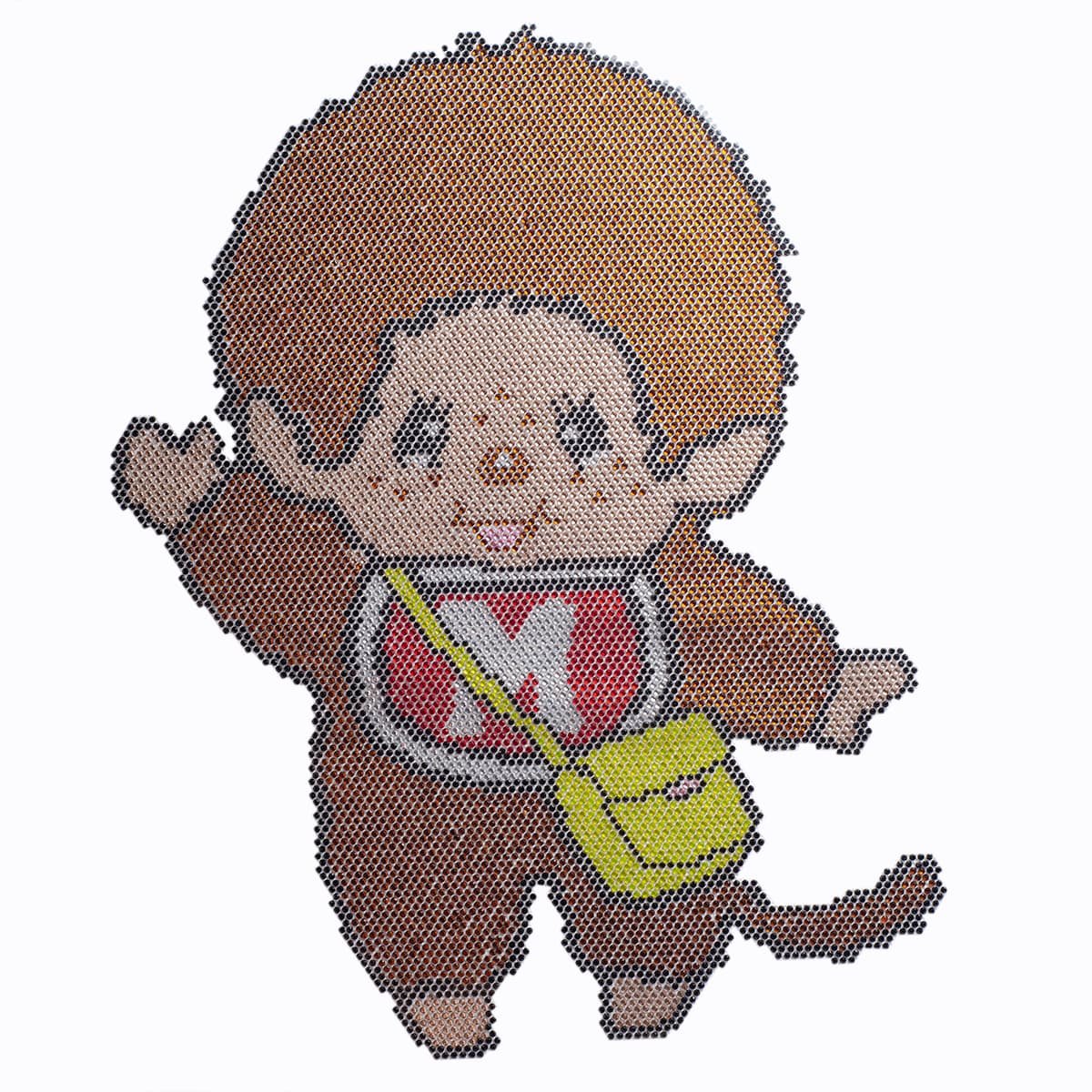
| Garment | Clearance to inspect | Approval evidence |
|---|---|---|
| T-shirt front | Collar, chest width, and size grading | Flat-placement photo plus worn sample |
| Hoodie back | Hood drop, shoulder seam, and panel height | Hood-up and hood-down sample photos |
Print a 30 × 21 cm outline on paper and hold it against each garment size. If the art approaches a pocket, seam, zipper, or hood fold, revise placement before asking for a production price.
Check neck drop, chest width, and the smallest garment size before selecting the center line.
Inspect the visible area below the hood when worn, including any shoulder seam intrusion.
Approve the figure’s separate brown, orange, green, red, and pale sections against one physical sample.
Test the entire stone field on the intended fabric; verify edges and small details after cooling.
Photographic reference
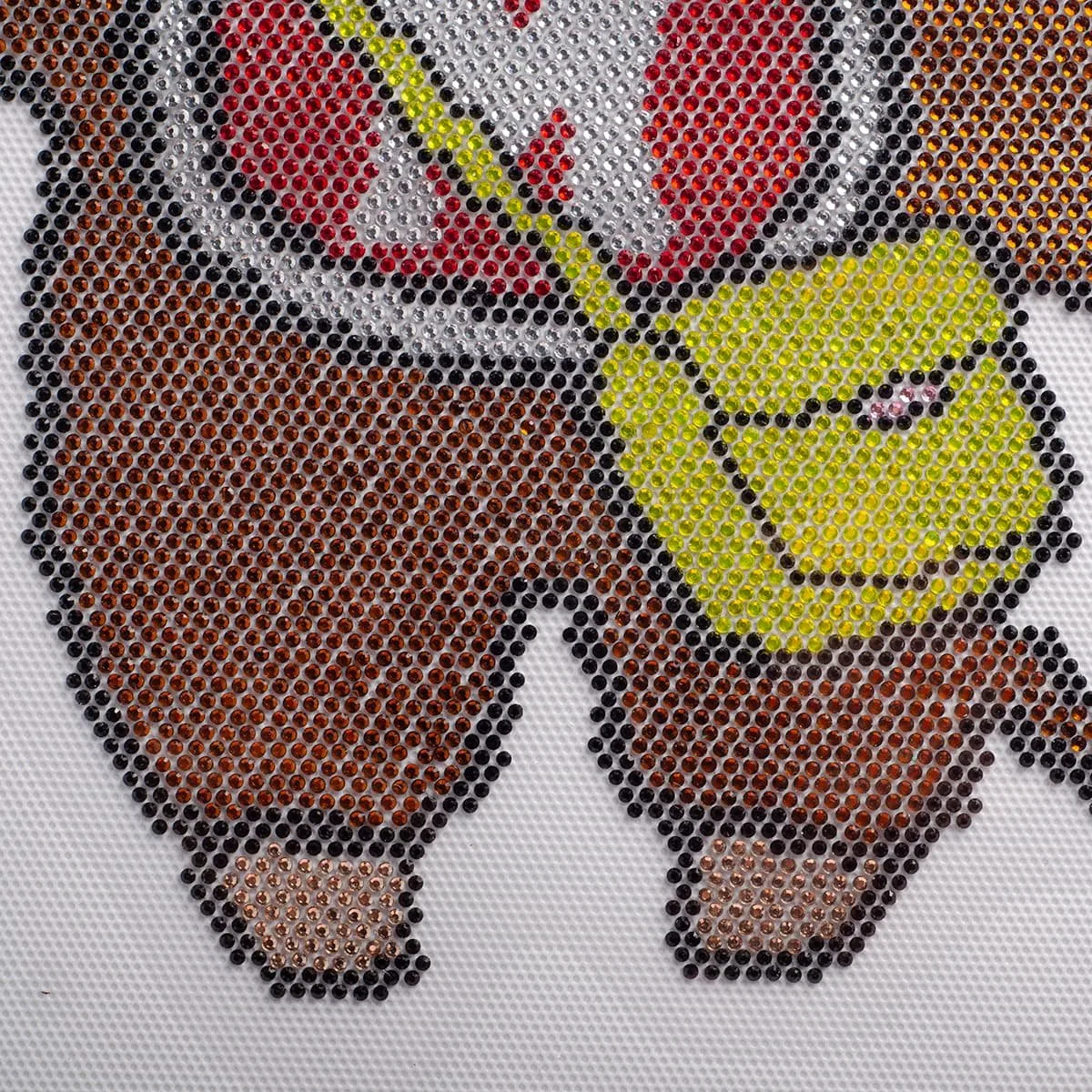
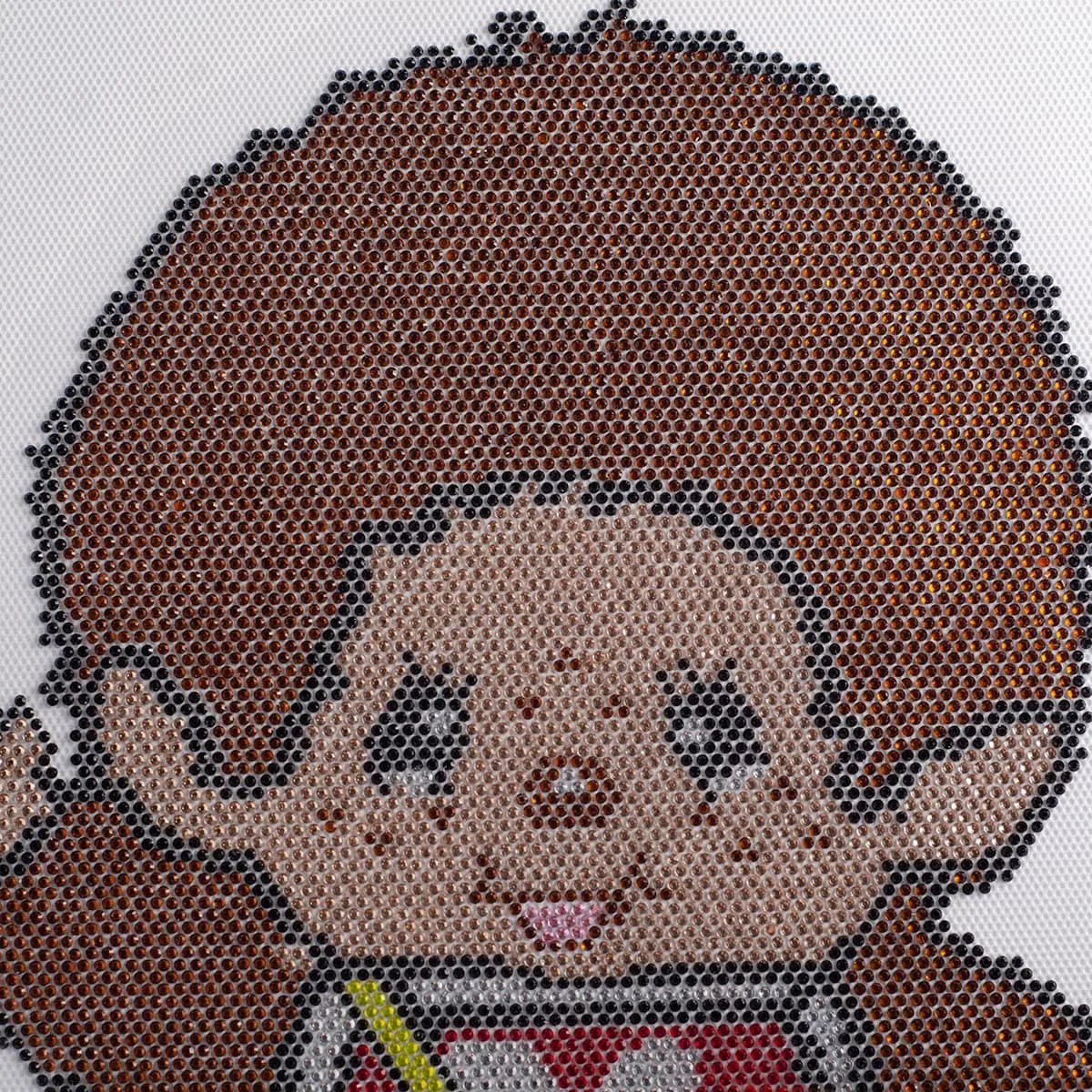
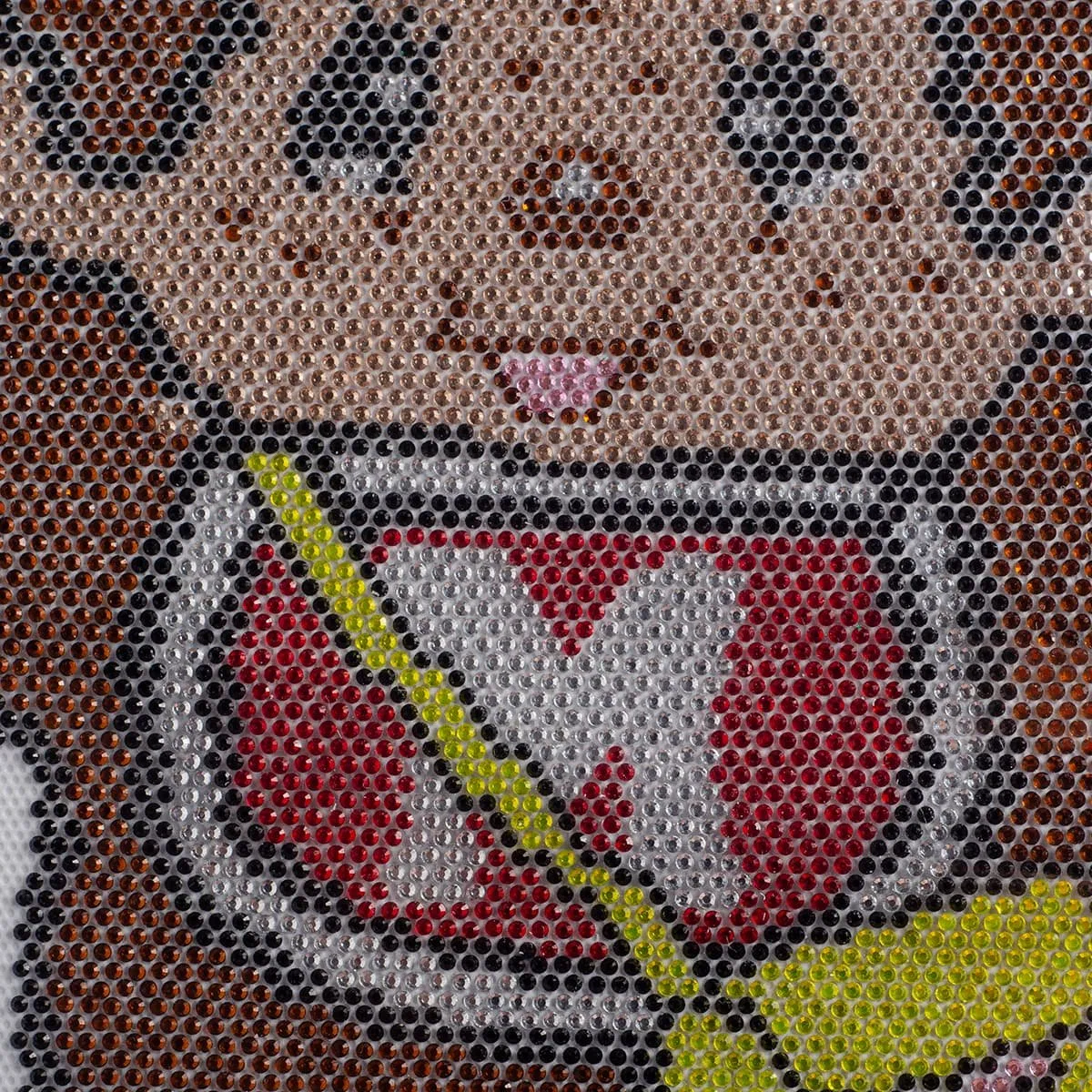
Close views help the buyer mark any character detail that must stay unchanged. The written specification, not the image alone, controls the approved version.
Artwork handoff
Circle the sign, bag, face, and clothing regions on the chosen photograph. Record which stone colors are mandatory and which may be reviewed as alternatives.
Name the finished blank, size, art centerline, and top clearance. A transfer drawing alone cannot prove where the hood falls when the garment is worn.
Give the approved transfer and garment trial one version identifier. If the colors or placement change, request a new sign-off rather than relying on an old image.
It is the recorded reference footprint. Confirm finished placement and any size adjustment against a physical tee or hoodie sample before approving the run.
Not by assumption. Check the visible area below the hood and measure the actual back panel, then approve its own placement drawing.
No universal setting can be verified from a photograph. Test the intended fabric, stone field, and care method; include the approved process in the written order.
Send garment composition, sizes, placement measurements, color reference, quantity, and delivery destination. Current MOQ is 50; application settings and order terms require a tested sample and written quote.