Start with the garment view
Place physical-size printouts on the actual blank. Compare the motif from close range and across a room. Note any seam, pocket, or fold that interrupts the outline. Do not let a zoomed digital mockup determine final size.
Choose rhinestone transfer patterns using garment scale, negative space, color contrast, production consistency, and sample testing.
Buyer perspective
A transfer pattern must do more than sparkle in a close-up. It needs to read at normal viewing distance, fit the garment panel, and survive the intended decoration process. A restrained motif with well-spaced stones may outperform a dense pattern on a small item.
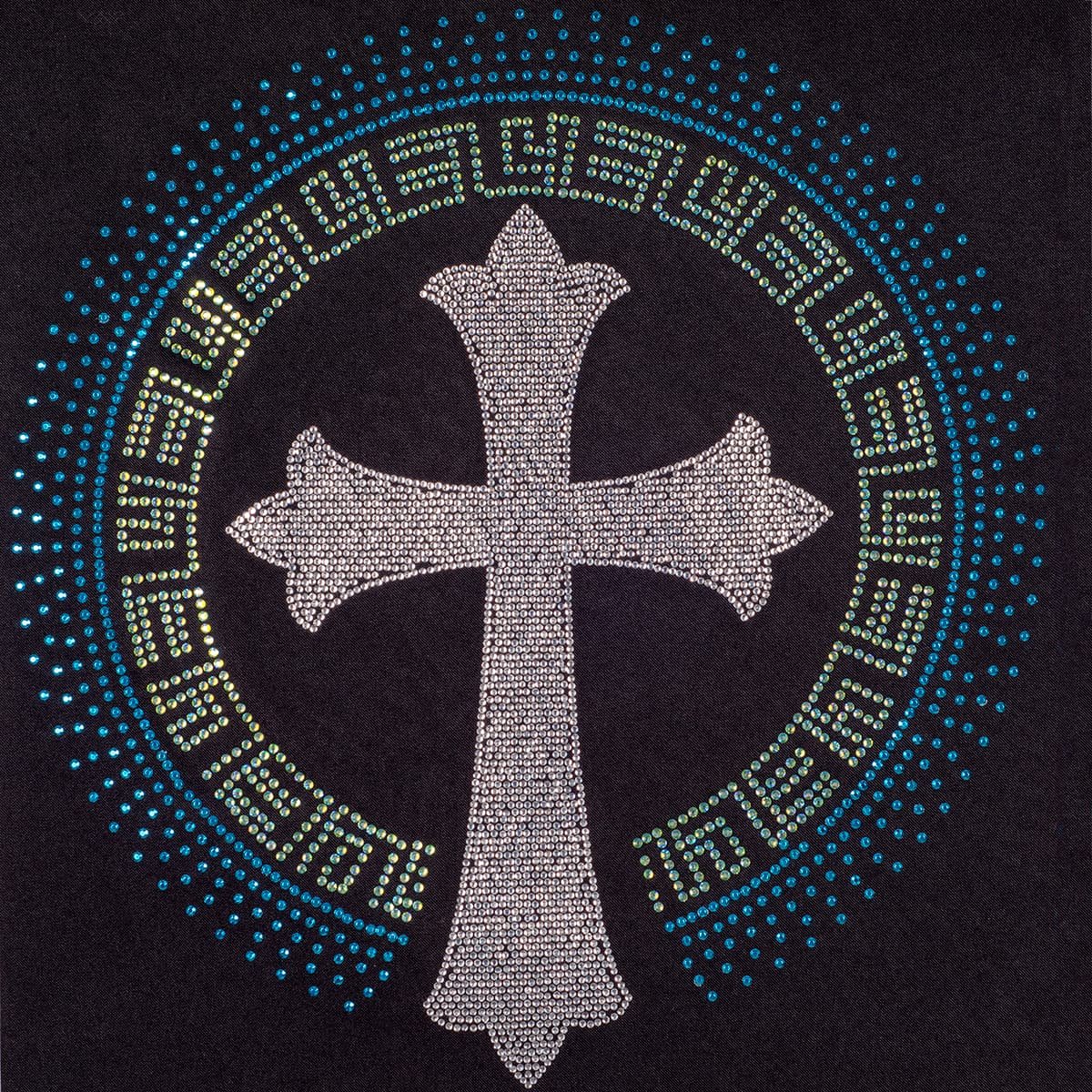
Options
Catalog photos often vary in scale and lighting. A fair comparison puts alternatives on the same blank.
Check whether the silhouette and key detail remain readable without an oversized garment panel.
Check whether stone density obscures open spaces or changes the garment hand feel.
Photograph each candidate on the actual garment color under the same lighting.
Document dimensions and stone colors of the winning pattern, then approve an applied sample.
What to decide
Place physical-size printouts on the actual blank. Compare the motif from close range and across a room. Note any seam, pocket, or fold that interrupts the outline. Do not let a zoomed digital mockup determine final size.
Look at the empty areas between lines and shapes. Dense fills can conceal the silhouette when stones are viewed at an angle; overly sparse designs can fragment. Test a few stone-color options against the garment color under ordinary light.
Record artwork revision, width, height, stone colors, and placement. Inspect the applied sample for alignment, missing stones, and garment surface change. Use the approved combination as the baseline for replenishment.
Send your artwork, quantity, destination, and specifications for a tailored quote.