Measure the full hang
Record the decorative body, chain or loop, clasp, and lowest point. Test the clasp opening on the actual handle or zipper hardware. A body-only dimension can understate how far the charm hangs or whether it catches on the bag.
Build a bag charm assortment by hardware fit, complete hanging length, visual grouping, SKU identity, and sample handling.
Buyer perspective
A charm assortment can look coordinated in a product grid but feel chaotic when attached to bags. Buyers should review scale, swing, color, and clasp fit on the intended bag styles. Treat the photographed tassel as one reference rather than a promise of every color or hardware option.
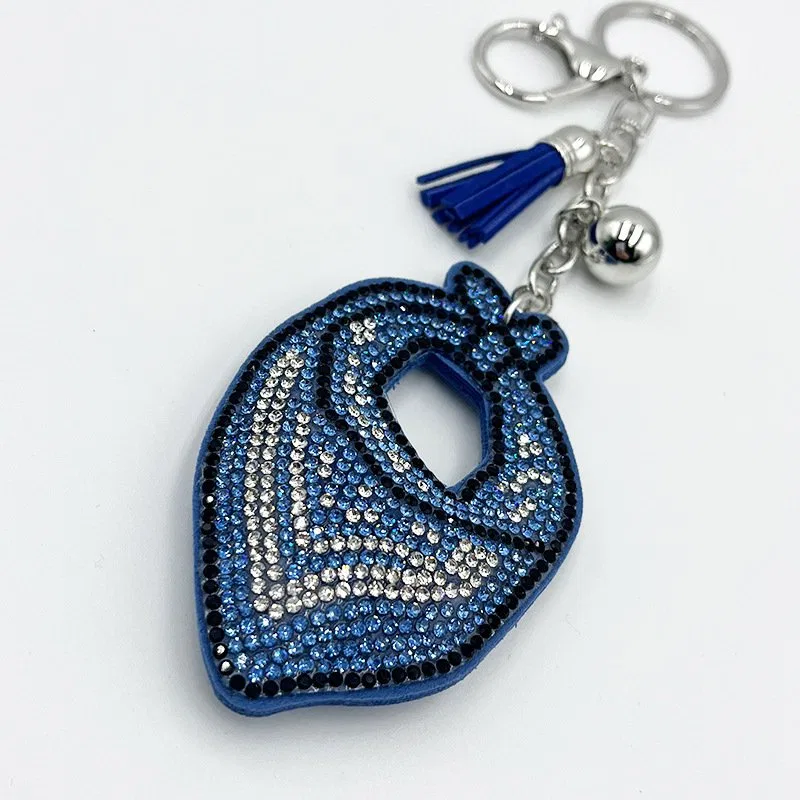
What to decide
Record the decorative body, chain or loop, clasp, and lowest point. Test the clasp opening on the actual handle or zipper hardware. A body-only dimension can understate how far the charm hangs or whether it catches on the bag.
Group motifs by customer story and color palette, then compare them on one bag style under consistent lighting. Avoid adding a near-duplicate unless it serves a distinct price or style role. Give each color and hardware combination its own SKU.
Attach and remove samples repeatedly; look for stone exposure, snag points, and noisy or awkward swing. Define pack protection and label position so styles remain identifiable without tangling in transit.
Specification
Three dimensions determine whether a charm works on a given bag: the decorative body, complete hang, and hardware opening.
Store the measured bag-and-charm photograph per SKU. A clasp that fits one bag loop is not universal fit.
Send your artwork, quantity, destination, and specifications for a tailored quote.