Outer silhouette
Verify the shield perimeter and any corner radius against the final outline drawing.
Relief design / DG-ZK-002
This shield reference combines a raised dark emblem with a contrasting ground. For wholesale TPU silicone labels, define the height of the relief and the separation of its fine lines before testing a heat-transfer result.
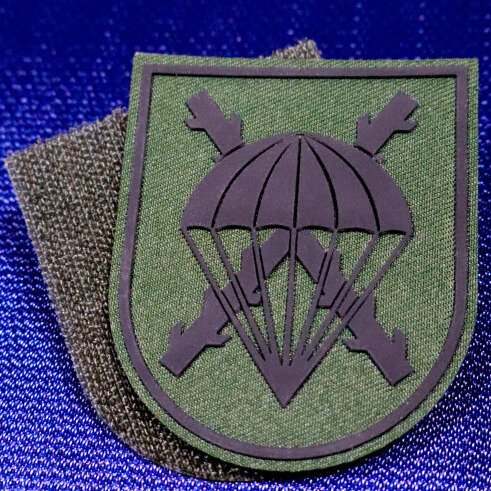
Verify the shield perimeter and any corner radius against the final outline drawing.
Match the muted green field to the approved color standard, not only a monitor image.
Specify the dark emblem height and inspect the narrow spaces between lines.
Keep a clear margin so the relief does not visually merge with the border.
The catalog gives a 5 cm reference. It does not settle orientation, overall border or raised thickness.
Material qualification
Provide the fabric weight, texture, coating and any finishing treatment.
Record the supplier-recommended application setting on the sample rather than assume one.
Examine relief, edge and bond after the agreed wear and care trial.
Current MOQ: 50 pieces. Confirm tooling, sample costs and production terms in writing.
A high-resolution image can establish artwork intent; it cannot establish hand feel or attachment.
Check whether the dark emblem separates from the green field during ordinary use. Photograph the label without a dramatic shadow.
Reveal raised-edge inconsistency and any closed gap between the fine parachute lines. Compare the same angle with the signed physical master.
This is a visual acceptance method, not a claim about colorfastness or transfer durability.
The adhesive-backed TPU wordmark reference puts emphasis on narrow letters rather than a shield relief. Compare further forms in PU, TPU and silicone labels.
The source provides a 5 cm reference without a verified axis. Ask for a dimensioned drawing that marks overall width, height, raised-feature thickness and border clearance.
No. The image shows a visual reference, not a substrate qualification. Submit the production fabric for an application sample and test its bond by your agreed procedure.
Only after a fresh artwork proof. Narrowing the design can close small negative spaces; approve the proposed relief and line separation at the new physical size.
Quote reference DG-ZK-002 with your artwork revision and fabric details.